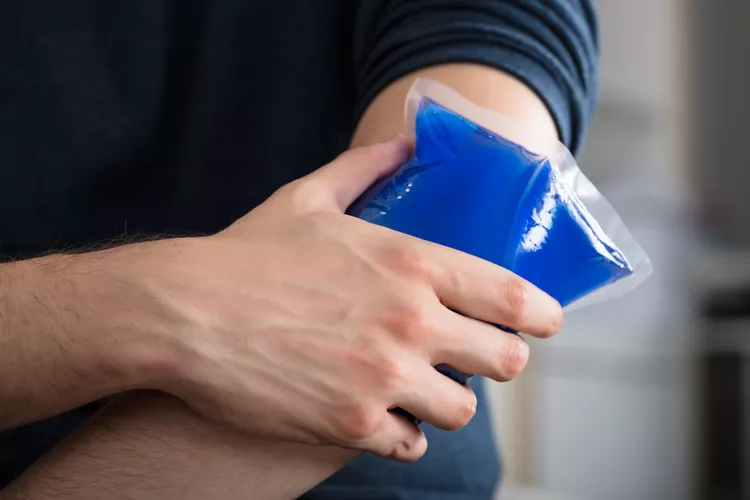
Grab a bag of frozen peas the next time you twist your ankle and the swelling will go down, at least for a few days. But a new study out of McGill University raises an uncomfortable possibility. That ice pack may be extending how long the pain lasts.
Researchers publishing in the journal Anesthesiology found that icing an injured area in mice roughly doubled the duration of pain, even while it reliably eased discomfort in the short term. Mice that received icing took longer to recover, roughly 25 to 40 days depending on the protocol, compared with about 9 to 20 days in control mice given room-temperature water on the same schedule.
Prior research from some of the same scientists found that ibuprofen and steroids produced much the same result. When those drugs suppress inflammation after an injury, pain can linger far longer than it otherwise would. Icing, the new study suggests, may work through a similar mechanism.
Icing After Injury Doubles How Long Pain Lasts in Mice
To test whether cold therapy had the same effect as anti-inflammatory drugs, the McGill team used two mouse models of inflammatory pain. In the first, they injected an irritant into the hind paw that reliably produces several weeks of measurable pain. In the second, mice received an injection into a leg muscle, were put on a running wheel, then received a second injection, mimicking a muscle injury a recreational athlete might sustain.
Both groups were assigned to either receive icing or not. For the treatment, researchers immersed the affected paw in ice water at about 39°F for either three 30-minute sessions per day or one 60-minute session per day, over three consecutive days. Control mice had their paws placed in room-temperature water on the same schedule. Pain was tracked using calibrated bristles pressed against the paw, with retesting at regular intervals over several weeks.
Injecting Immune Cells Into Iced Mice Reversed the Pain Delay
Short-term, icing did its job. But the long-term picture was a different story. Mice iced three times daily took an average of 40 days to fully recover. Those iced once daily for 60 minutes averaged 25 days. Control mice, whose paws were placed in room-temperature water on the same schedule, recovered in roughly 9 to 20 days. Researchers also tracked pain by filming the mice's faces and scoring their expressions for signs of discomfort, and on day 30, the iced mice were still grimacing noticeably more than controls.
What was driving the delay? Earlier work from the same group pointed to a likely culprit: neutrophils, white blood cells that rush to an injury site within hours of damage. These cells release proteins that appear to help the body shut down the pain response once the early healing work is done. Anti-inflammatory drugs block that process. Cold therapy may interfere with the same system, possibly by affecting how neutrophils behave at the injury site, though the authors note the exact mechanism still needs more work.
To test that idea directly, the team injected isolated neutrophils into the paws of iced mice. It worked. Restoring those cells brought recovery back toward the normal timeline in both injury models, largely reversing the pain-prolonging effect of icing.
Contrast Therapy Eased Pain Sensitivity Without Delaying Recovery in Mice
Not every cold-related treatment caused the same problem. Heat therapy had no meaningful effect on pain levels or recovery time. Menthol gel, which triggers a cold sensation without actually lowering skin temperature, also had no effect on recovery duration. Because menthol mimics the feeling of cold without the temperature drop, its neutral result suggests that actual tissue cooling, not the sensation of cold, is what sets off the recovery delay.
Contrast therapy, alternating between cold water and room-temperature water, did not cause the same problem. It reduced touch sensitivity during treatment without delaying recovery. That is not the same as being a proven pain treatment, but it suggests that brief cold exposure offset by room-temperature water may avoid some of the immune slowdown that longer cooling seems to trigger.
Icing Has Long Been Standard Care, But the Evidence Was Always Thin
Icing has been built into first-aid protocols for decades, embedded in acronyms like RICE, PRICE, and POLICE that athletes and coaches have long followed. But the supporting evidence was always limited. A 2004 systematic review found short-term pain relief benefits, while a more recent clinical guideline concluded there is no solid evidence that icing alone improves pain, swelling, or function after an ankle sprain.
This study adds a specific biological reason for that skepticism. Mice are not humans, and the researchers are clear that controlled clinical trials in people are needed before anyone rewrites treatment guidelines. Still, the findings add to a growing body of evidence suggesting that clamping down on inflammation too aggressively after an injury, whether with drugs or cold, may get in the way of the body's own healing process.
Pain relief after injury still matters, and there may be options that avoid this particular concern. Acetaminophen, nerve stimulation therapies, and contrast therapy are among the alternatives the researchers point to. For anyone who reaches for an ice pack as a reflex after a sprain or strain, this study is a reason to reconsider.