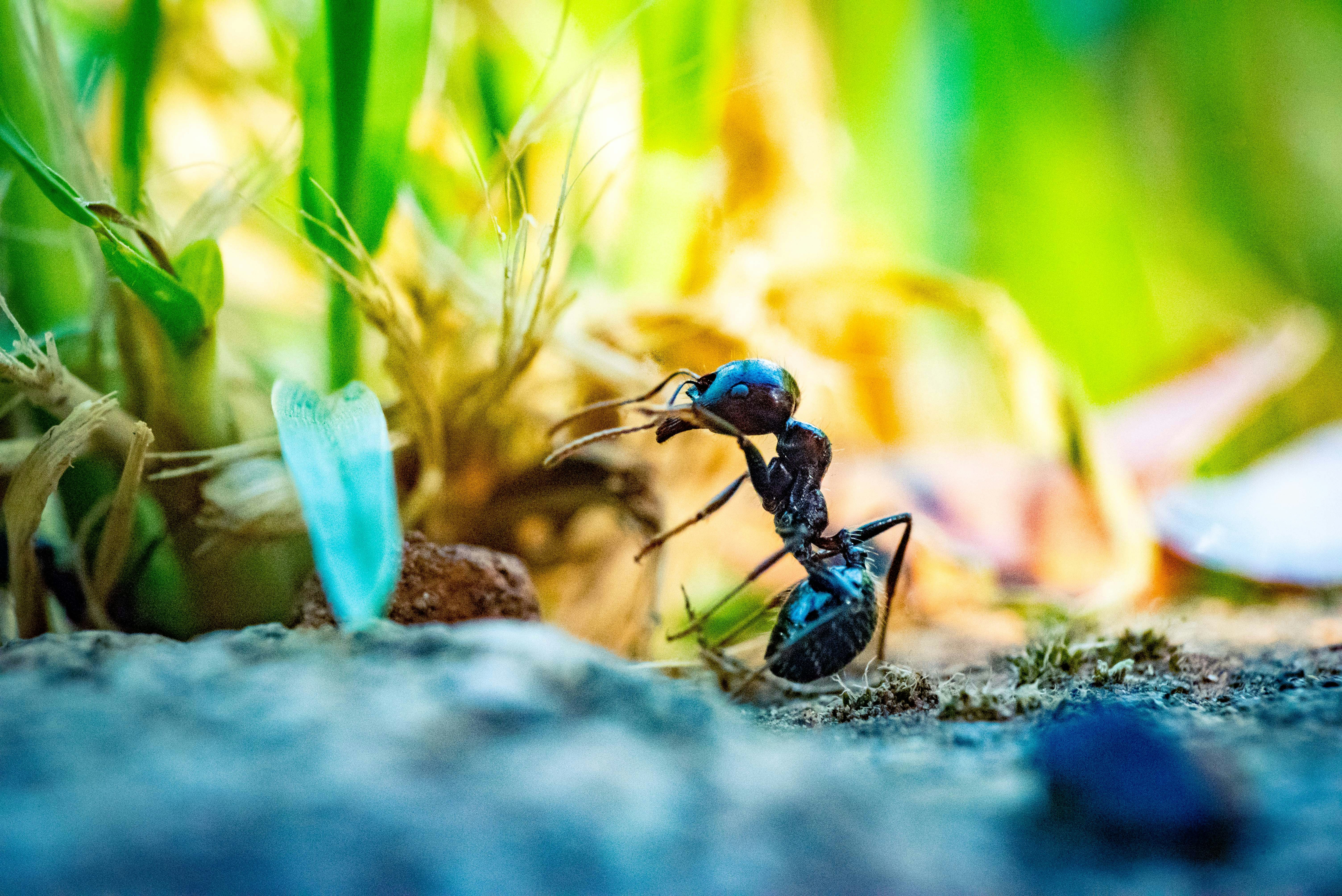
An ant that can turn carbon dioxide in the air into dolomite stone in its exoskeleton may hold clues to how humans can sequester greenhouse gases to avert climate disaster.
Fungus-farming ants forage for vegetation to feed cultivated fungi. In turn, the high density of ants and fungi can result in high concentrations of CO2 inside the nests.
In 2020, Cameron Currie at the University of Wisconsin-Madison and his colleagues found that the ant species Acromyrmex echinatior incorporates a carbonate biomineral into its armour. The ants do this through a symbiotic relationship with bacteria, which transform CO2 into rock.
Now, the team has discovered that another fungus-farming ant, Sericomyrmex amabilis, can do the same thing without symbiotic bacteria, becoming the first known animal to have evolved this ability.
Remarkably, the mineral they make is dolomite. Dolomite rocks typically require millions of years and complex geological processes to form. Forming dolomite in the lab is also extremely difficult, often requiring high temperatures and pressures because magnesium doesn't easily fit into the calcium carbonate structure. Yet, the ants do this quickly and effortlessly.
For fungus-farming ants, turning CO2 into stone solves at least two problems: strengthening their exoskeletons and preventing the build-up of toxic CO2 inside the colony.
"We have discovered a natural system that has evolved, over millions of years, to reduce the toxic accumulation of atmospheric CO2 in an ant colony," Currie says.
In an effort to counteract global warming, scientists are exploring techniques for converting atmospheric CO2 into carbonate minerals. "These ants are the first animal shown to be engaging in such a process, offering exciting potential as a model for human efforts," Currie adds.
Cody Freas at the University of Toulouse, who wasn't part of the study, describes this as a "remarkable adaptation". "Individuals take on the role of living carbon scrubbers, converting atmospheric carbon dioxide into a protective mineral armour," he says.