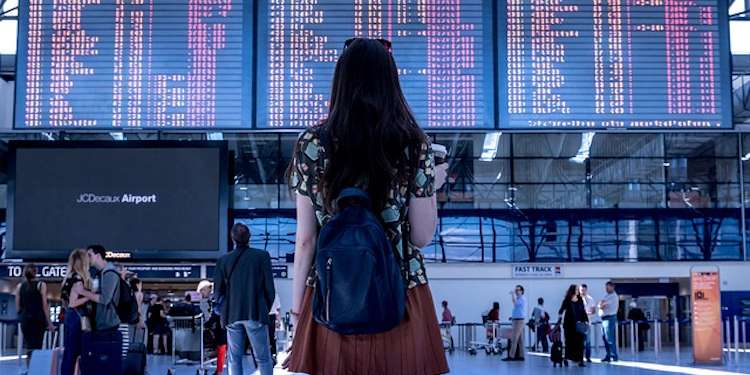
The thermometer read 80 degrees in New York last month when I headed to the airport. But inside the terminal I was met with air so cool I topped my T-shirt with a sweater, then a denim jacket, and then the scarf I always bring in my carry-on bag. Sound familiar?
Airports often seem to border walk-in meat-cooler territory, and there's a lot of speculation out there as to why. But what's the real reason, and why does it seem so hard to get right?
Ken Warren, a mechanical engineer who runs facilities at a major international airport, knows the difficulty firsthand: it is not as simple as setting the thermostat at home.
It's the airflow, not the temperature
Warren says to think of an airport as a big, blown-up balloon. To maintain good indoor air quality, the system has to continuously push a little bit of air outside to keep exhaust from idling planes and vehicles from being drawn inside the building. "There's a tremendous amount of doors in and around an international airport," Warren says.
Maintaining this outward air movement, known as positive pressure, is challenging because there are so many different spaces in an airport, from narrow corridors and jet bridges to giant open malls and restaurants. You're going to get air currents and imbalances, and that's what people notice. "You feel the wind upon your skin," Warren says.
In other words, it's the breeze, not the thermostat, making you shiver. "The deviations of all these spaces, and the pressurization, is probably what causes folks to complain about airports being on the cool side," Warren says. "It's probably not temperature but airflow."
The air really does come out cold
Did you know that cooling systems deliver air at around 55 degrees? The air comes out super cold, then hugs the wall and mixes with the existing air to eventually get to the desired 70 or 72 degrees when it hits your head and shoulders.
He gives an example: "You ever been in a basketball arena and go, 'Wow, that feels cool?' And then it goes away, and you're like, 'What was that?'" Warren asks. "Well, that was probably the system that just had a little jet of cold air, and you just happened to be standing there, and it was like 40 or 50 feet away." If you catch that breeze in an airport, you're going to feel it.
Warm air is lazy
"Heating is extremely difficult," Warren says. "It's really hard to deliver warm air down low." Cold air "loves to go and travel," he says, but warm air just wants to stop. "It's lazy. It's like, 'Oh, I'm so nice and warm. I don't want to go that far.'"
You're not expected to stay long
Unless your flight has a massive delay, airports are what Warren and other experts call "transitory spaces." Passengers are expected to be there for a relatively short amount of time, so comfort can take a back seat to other concerns, including an electricity bill that can run to a million dollars a month.
"One of the things that we consider when we do design work is that in the fall, winter and spring, people are bringing their coats with them because they are traveling," Warren says. "So yeah, it might be a little bit cold, but you should be able to layer up and put your clothes on."