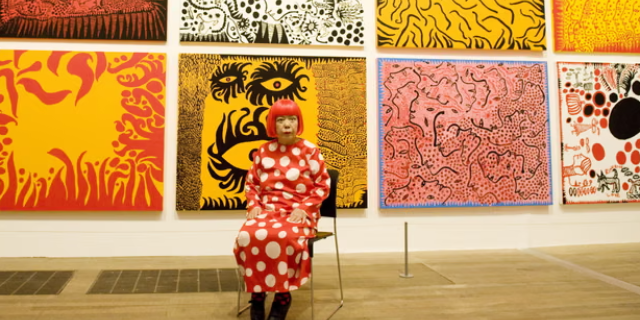
When Yayoi Kusama was a child, ordinary objects sometimes seemed to change before her eyes.
The red flowers on a tablecloth might suddenly spread across the walls, ceiling and windows. Fields of dots appeared to cover everything around her — even her own body.
For many people, such experiences would be frightening. Kusama found a way to face them: she turned them into art.
Dots and flowers became the language of her creative life. She painted them on canvases, sculptures, furniture and clothes. In her famous Infinity Mirror Rooms, lights and reflections seem to continue forever, making visitors feel as if they have stepped into another universe.
"I fight pain and fear with art," Kusama once said. Creating did not simply distract her from difficult experiences. It gave them a shape that she could control and share.
After moving to New York, Kusama became an important figure in the city's experimental art scene. She organized unusual public performances and created works that challenged familiar ideas about where art belonged and what it could look like.
Over time, her exhibitions attracted huge crowds. Visitors waited for hours to enter her mirrored rooms, while her pumpkins and endless dots became instantly recognizable around the world.
Yet Kusama's influence goes beyond her visual style.
By speaking openly about fear, anxiety and her unusual way of experiencing the world, she showed that creativity does not have to come from a calm or conventional mind. Experiences that feel overwhelming can also become sources of powerful artistic ideas.
Today, the art world is more willing to welcome creators who see, feel or communicate differently. Kusama helped open that door by refusing to hide the connection between her inner life and her work.
Her art did not erase fear. Instead, it transformed fear into something bright, strange and beautiful — and invited the rest of us to step inside.