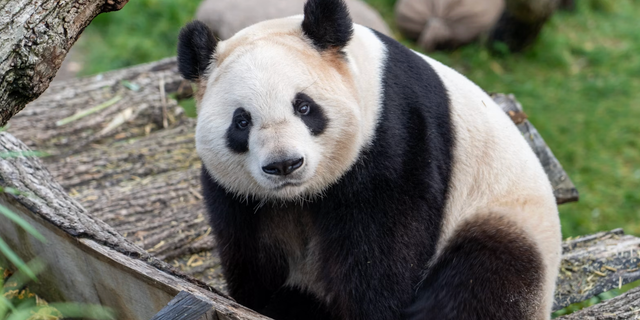
Outside the panda pavilion at the Moscow Zoo, crowds gather daily with cameras raised, hoping to catch a glimpse of the zoo's beloved panda family. Russian keepers describe caring for giant pandas not just as a job, but as a companionship that brings joy and comfort to their daily lives.
Living in the spotlight
Giant pandas Ru Yi and Ding Ding arrived in Moscow in April 2019. In August 2023, their cub Katyusha was born — the first giant panda ever born in Russia. Over the years, this family has become one of the zoo's biggest attractions.
"Katyusha is not only a star of the zoo, but also a beloved figure across Russia," said Elena Ovchinnikova, head of the China Fauna Department. The young panda seems instinctively aware of the spotlight. "She clearly knows visitors are there to watch her. She often turns toward the crowd as if greeting them, and she is incredibly photogenic." Katyusha has earned the nickname "little queen" for her lively and confident demeanor.
Ovchinnikova has been passionate about animals since childhood. "It is only after spending a long time with them that you realize every panda has a distinct personality," she said. "Even now, we are constantly amazed by nature for creating such gentle, soothing creatures."
Senior zootechnician Alexander Vervald previously spent years caring for snow leopards and lynxes. When he learned pandas were coming to Moscow, he immediately applied to join the care team. "No one can resist the charm of pandas," he said. "I feel extremely fortunate to be part of their care journey."
Bonds beyond words
Seven years ago, the care team traveled for professional training in feeding management, behavioral observation, disease prevention and enclosure maintenance. Today, the system runs smoothly, and all three pandas maintain excellent physical and mental health.
Every morning, keepers review the pandas' overnight activity, sleep quality and feeding patterns before conducting thorough health checks. Their day also includes cleaning enclosures, preparing food, behavioral training and data collection.
"Every day with pandas brings new surprises," Vervald said. "It never feels monotonous."
To keep the pandas mentally stimulated, bamboo shoots and treats are hidden inside toys and enclosure corners, encouraging them to forage, climb and explore. Keepers design new swings and facilities regularly, and prepare exclusive birthday surprises each year. The enclosures are modeled after natural habitats, with calibrated temperature and humidity control, climbing frames and flowing water.
"Whenever it snows, all three pandas become exceptionally energetic," Vervald shared. "They run, tumble and play, getting covered from head to toe — utterly adorable."
Sowing seeds
Senior caretaker Sergey Afanasyev is responsible for preparing the pandas' special steamed corn bun cakes. "The pandas are extremely fond of these," he said, "but we strictly control portions in line with scientific feeding standards — the little ones always crave more."
For visitors, the pandas have served as a window into the lives of animals from faraway habitats. The zoo is currently expanding Katyusha's enclosure and advancing plans for a golden snub-nosed monkey pavilion.
"The core mission of the Moscow Zoo is public ecological education," said zoo director Svetlana Akulova. "Our priority is not merely to expand animal populations, but to recreate naturalistic habitats and raise public awareness of wildlife protection."
With a history spanning more than a century, the zoo has hosted pandas across five decades. "We will stay with the pandas as long as they are here," the keepers said. "This is our unwavering promise."