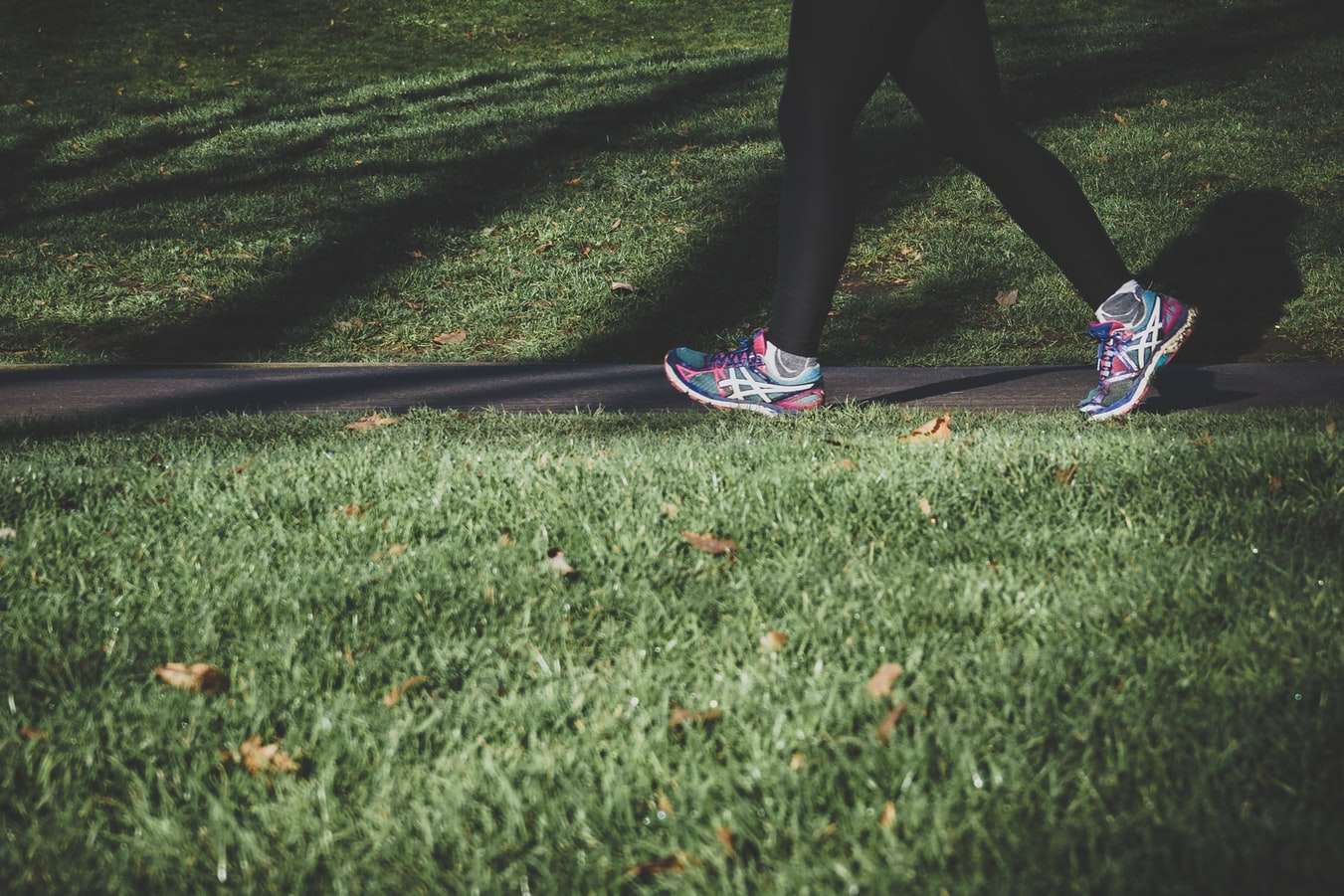
A memorable moment at a prize ceremony a few Novembers ago came when the host invited a young barefoot guy up on stage. But the host had announced she was looking for the "most badass person" in the audience, and his pals had immediately pointed him out, shouting that their friend "doesn't wear shoes until the first snow!"
That night, feeling quite enamoured with the man wearing no shoes, I went home, opened my computer and read that going barefoot can help with balance and gait. I learned that after six months of barefoot walking, foot strength can increase dramatically, on average by more than half.
Winter came quickly. I waited for spring, then found a path at the edge of the woods where the snow had mostly melted, stuffed my boots in my rucksack and began to walk.
That was when I realized that, having had no practice in barefoot walking, I was akin to the astronauts who come down from months-long space missions with feet so baby soft that, for weeks, walking back on Earth is painful. The cold path really hurt my feet, which have more nerve endings per square centimetre than any other part of the body, around 200,000 per foot. That's a lot of nerve endings to be sending pain messages to the brain all at once.
Still, I tried again, a few weeks later, when the buds were swelling on the trees and the last snow had been replaced by mud puddles. This time I did not feel like an astronaut. I felt like a hippo. It is wonderful to be wallowing in mud, even just up to your toes. There is so much that feels pleasant to touch while walking a path barefoot.
What does not feel incredible is stepping on small rocks and other sharp objects. Still, something happens when one has to look out for hazards underfoot. It necessitates looking at the world that bit more intently. You have to walk more slowly, and as a result you are much less likely to accidentally step on the small creatures crossing the path.
I think that's really why I like going barefoot. I'm not really bothered if my feet are strong or weak, but I do want an excuse to walk with more intention. In her book A History of Walking, Rebecca Solnit writes: "I like walking because it is slow, and I suspect that the mind, like the feet, works at about three miles an hour. If this is so, then modern life is moving faster than the speed of thought or thoughtfulness."
When I'm walking even more slowly than that, because I'm looking out for rocks and twigs, I'm walking even slower than the speed of thought. Not long ago, though, while glancing down to check my footing, I saw a stream of shiny red insects crossing the path just in front of my toes. On closer inspection, they were ladybugs, so many that they made tiny ruffles in the nearby grass, like wind. When I got back to the house, I read that a group of ladybugs is collectively known as a "loveliness." During that particular search, I didn't feel like I was distracting myself from my surroundings; I felt like I was paying attention again.
What better way to entwine myself with my surroundings than to let my feet directly meet the ground, even if that's only a sidewalk rich in pebbles?