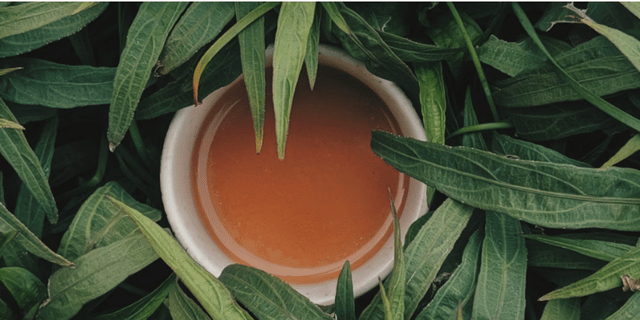
According to American Derek Poskin, "Coffee is for work, but tea is for life." His typical day always begins with a cup of tea.
Poskin now runs Empty Cup, a tea house renovated from an old house nestled in Yangzhou's old quarter in Jiangsu Province, where he introduces visitors from around the world to China's tea traditions.
He first arrived in Yangzhou in 2016, tracing a poem by Tang Dynasty poet Li Bai and developing a growing appreciation for Chinese tea culture. Nearly a decade later, he has become a tea entrepreneur, sourcing premium leaves across China and selling them to customers worldwide.
"I started drinking and buying more, and eventually turned my house into a warehouse," he said. "I had to share it somehow, and that's how the business began."
Poskin launched his tea venture in 2018 as a side project, aiming to connect Western tea enthusiasts with the traditions behind it. The early years were challenging, but orders eventually arrived from around the world. Rather than working through middlemen, he travels directly to tea-growing regions — from the ancient forests of Yunnan Province in the southwest to the oolong gardens of Fujian Province along the eastern coast.
One of his most memorable expeditions took him to Guafengzhai, a remote village deep in the mountains of Yunnan's Yiwu region, renowned for its high-quality Pu'er tea and long a bucket-list destination for the entrepreneur.
The journey began with a leap of faith — connecting through social media with a young local farmer named Zhao Xiaoyun. "I had this prearranged date with a person I'd never met, in a town I'd never been to, to venture deep into the mountains," Poskin recalled. "But as soon as I met her, I knew we were on the same page. We both spoke the language of tea."
The four-day expedition immersed him in every aspect of tea production. Joining Zhao, her mother, sister, and friends deep in the tea forests, he picked leaves, laid them out to sun-dry, and helped with the roasting.
Poskin's dedication to understanding tea goes beyond sourcing trips. He spent a year in Chaozhou, Guangdong Province, studying the art of making clay teapots used for gongfu cha — tea brewed with skill and ceremony. Along the way, he has joined local customs and festivals, becoming not just a buyer but a participant in the cultures he visits.
"It was incredible to be part of that living tea culture," he said. "When I experience the world through the eyes of the people in the mountains, I realize how deep tea culture really is. The leaves themselves are just a piece of the puzzle."
Through his travels, Poskin's understanding of tea has shifted from a search for correctness to an appreciation for diversity. "Chinese tea culture is fluid, more Taoist," he said. "Every place has its own style, and any way you drink tea is the right way. I find that very welcoming and liberating."
Poskin documents his sourcing journeys through videos and photographs, sharing them with customers to create transparency and connection between consumers and producers. His storytelling extends to a podcast called Tea Soup, a YouTube channel, and an active social media presence, through which he has built a following of enthusiasts eager to learn about authentic Chinese tea culture.
Looking ahead, Poskin envisions his business evolving into a social enterprise that gives back to farming communities. "From the start, this has been a passion project," he said. "I want a deeper understanding of Chinese tea, to source better tea, and to awaken more people to Chinese tea culture."