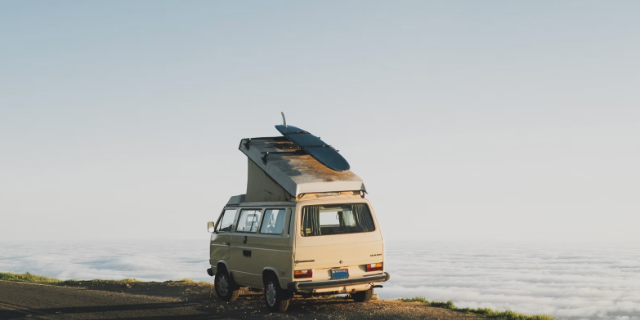
This is the dream behind van life. Once seen mainly as a practical choice for retirees or serious outdoor lovers, campervans are now attracting younger travellers who want freedom, flexibility and a slower way to see the world. But behind the beautiful photographs lies a less glamorous question: What is it really like to turn a vehicle into a home?
Camping and caravanning have become increasingly attractive to travellers looking for a flexible and relatively affordable holiday. There are no hotel rooms to book and no fixed route to follow. If one place becomes crowded or the weather turns bad, the road offers another possibility.
A tent can provide that freedom at a low cost. For some travellers, however, sleeping on the ground soon loses its charm. They want a proper bed, a small kitchen and perhaps even a tiny bathroom — all on four wheels.
Social media has made this lifestyle look especially appealing. Photos tagged with "van life" show warm wooden interiors, neatly folded blankets and mountain views framed by open back doors. Campervans can also serve as mobile offices, allowing some owners to work while travelling.
Yet buying a purpose-built motorhome can be expensive. This has encouraged more people to purchase ordinary vans and convert them themselves.
Dale Comley and Charlie Low did exactly that. According to National Geographic, they bought a van for £8,000 and spent another £6,700 turning it into a home. Their finished vehicle included a kitchen, a water tank, a heater and a solar-powered electrical system.
Their most important lesson was surprisingly unromantic: plan everything before picking up a tool.
A van has strict weight limits. Add thick wooden floors, heavy cupboards, batteries, water and an impressive kitchen sink, and the vehicle can quickly become too heavy. The order of construction matters too. A mistake discovered late may require owners to remove expensive work and start again.
Some jobs are also better left to professionals. Installing gas, windows or electrical systems may be dangerous for an inexperienced builder. Doing everything yourself can save money, but knowing when to ask for help may save considerably more.
Then there is daily life. Social media rarely shows the search for drinking water, the lack of a shower or the difficulty of finding a legal place to sleep. Even people who love the outdoors may discover that a small vehicle feels much smaller after several rainy days.
Responsible travel requires more than finding a beautiful parking spot. Owners must check local rules, avoid disturbing nearby residents and leave natural areas as clean as — or cleaner than — they found them.
That is why experienced owners offer one simple piece of advice: rent before buying. A weekend in a campervan can reveal whether the lifestyle feels liberating or merely cramped. It is a much cheaper discovery than completing an entire conversion and realizing that you dislike life in a space smaller than some bathrooms.
The trend is not limited to Europe. China's recreational-vehicle industry, although still developing, has begun to divide into two distinct markets. Traditional motorhomes remain popular with older retired travellers, while younger consumers show greater interest in smaller, more practical and affordable camping vehicles. Electric models and compact campers have also emerged as notable growth areas.
This suggests that van life is becoming more than a collection of attractive travel photographs. For some people, it is a cheaper holiday. For others, it is an experiment in living with less. And for a few, it is a home that happens to have wheels.
The dream is real — but it comes with weight calculations, parking rules and the occasional missed shower. Perhaps that is precisely the attraction: van life promises freedom, but asks travellers to decide how much comfort they are willing to leave behind.