You and your friends are out for dinner at an Italian restaurant, and the waiter lists a few specials for you to choose from. You decide on the tagliatelle. Your friend closest to you leans over and says they're going for the ravioli. It crosses your mind that you would also enjoy the ravioli, but you decide you're happy to stick with your original choice of tagliatelle. That is, until the waiter takes the rest of the table's order and it turns out that everyone but you is getting the ravioli.
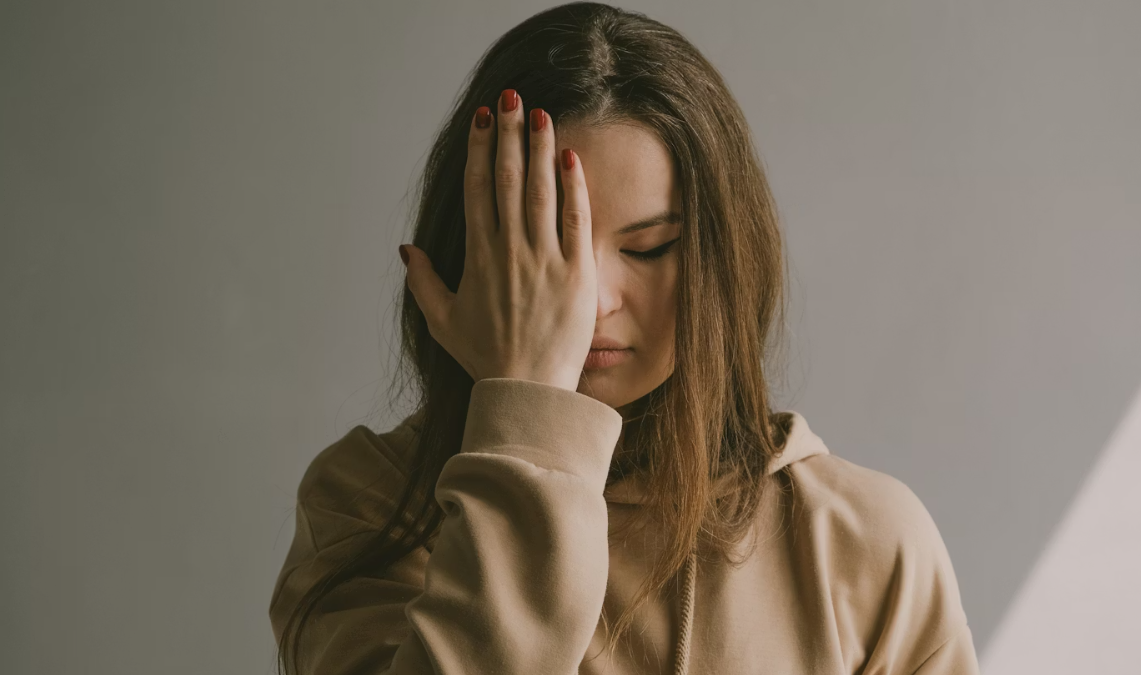
If you are anything like me, it is at this point that the sinking feeling of FOMO (fear of missing out) will set in. This feels like something over and above the awareness that you might be missing out on something nice, since you already had this awareness when you learned the ravioli was an option. What now makes your lack of ravioli particularly salient to you is not simply that you aren't having it, but that others are going to be sharing in an experience that you are not. There is now a social implication beyond just what you will or will not enjoy eating.
By recognising the social orientation of the experience, we can take a step towards understanding the nature of FOMO and what it can do for us. Emotions that feel bad often serve important purposes. Anger can help us realise when things are unjust, regret can motivate us to make amends. If FOMO has a function like these other emotions, what is its role and how might it make our lives better?
There are three important features of FOMO to unpack. The first is that the object of our FOMO (the of in the 'fear of missing out') is some experience or thing that we imagine as being absent from our lives. It is about the ravioli we didn't have at dinner, the friends we won't see at the weekend, and the car we can't afford. Yet, our preoccupation with a hypothetical absence is not enough to distinguish FOMO from a host of other feelings we have about absences. We might be angry that the milk isn't in the fridge, feel lonely while our partner lives abroad, or regret that we haven't pursued a particular career – but these absences don't constitute FOMO. So, the second important element is how we evaluate the potential absence. And this is where the social analysis comes in. We evaluate the absence as negatively impacting our social life or social connections.
While it doesn't take a big leap to see how missing your friends at the weekend could impact your social life, the idea that this kind of social evaluation underpins the very experience of FOMO more generally is a harder sell. But, while some of the things we feel FOMO about don't wear their social nature on their sleeve in quite the same way, this is no reason to think it is not playing an important role. Take the Dutch postcode lottery, where all properties within a given postcode can win a prize if that postcode is randomly selected. The catch is that you must have bought a ticket to be included in the winnings, which include not only a cash prize but a BMW for each ticket-holding home. This tactic plays directly into residents' FOMO. Not only do they fear losing out on wealth, but now they have to think about being the only person on the street without a shiny new car. The social aspect is critical in how we imagine missing out on material riches in this case.
The third thing to consider about FOMO is whether we can we take our acronym at face value and understand FOMO as a genuine kind of fear. There is a seemingly good reason to think we cannot. Philosophers, at least since Aristotle's Rhetoric, understand fear in terms of danger. We are afraid of things that we perceive as harmful. Such harm, as Aristotle puts it, must be close at hand, terrible, and have the power to cause us great pain. This makes sense when we consider why we are afraid when we come across a bear in the woods. But it is less clear that picturing your friends eating a different pasta dish at the restaurant represents a danger in Aristotle's sense. You will probably enjoy the tagliatelle very much and move on with your life, no harm done.
One response to this puzzle is to point out that there are a bunch of things we are afraid of that are not dangerous. Many people's fear of flying wouldn't be diminished by their being shown the statistical evidence that flying is so much safer than driving. And many will run away at the sight of a common house spider despite knowing that we are much more of a threat to it than it is to us. We call fears like these recalcitrant; they persist despite our knowledge that the object of our fear is not particularly dangerous. And nobody is denying that these still deserve to be branded as fears, albeit special ones.
So perhaps FOMO is like this. We fear missing out on the ravioli despite our knowledge that its absence presents no danger. Yet, the thing about recalcitrant emotions is that there is a sense in which we shouldn't have them. All things going well, we wouldn't be afraid of spiders, and we wouldn't be surprised that we haven't won the lottery. Why is this? Recalcitrant emotions pull us in two directions: we fear something, so we envisage danger, yet, at the same time, we know it isn't dangerous. If our rational faculties were operating optimally, we wouldn't exhibit this kind of inconsistency.
But I don't think the same is true of FOMO, at least not in all cases. If I cannot afford to fly home for a good friend's wedding, I will experience a great deal of FOMO as I imagine all my friends reuniting without me. Can it really be that I shouldn't feel this way? It is not enough to reply that, yes, you shouldn't feel FOMO because you can't do anything about the situation. We have all sorts of emotions that are appropriate even though we can't change things. If I speak poorly about someone and then regret this, my emotion is the right one, even though I can't change the fact that my words hurt her.
Insofar as our emotions are the sorts of things we should or should not have, my FOMO over the wedding seems to land on the should side of things. And the reason for this is that, unlike common house spiders, there is, in fact, a significant potential threat that FOMO directs our attention towards. As I have said, FOMO is characterised by our envisaging some absence as damaging to our social lives or social connections. And such damage stands to really harm us. It is good to connect with people not only for connection's sake, but also because we are coming to see, more and more, how such ties underwrite our ability to live well. We need social connection to form affiliations, maintain intimate relationships, find shelter and security, avoid loneliness, satisfy our need to belong, and progress at work, as well as to improve the quality of our life. Research shows that social connection and an active social life are primary factors in increasing longevity. If these things are under threat, it makes sense that we would respond fearfully.
If we do go wrong in our feelings of FOMO sometimes, it is more likely due to our overestimation of the significance of something rather than due to some kind of inconsistency. When I think about missing the wedding, I imagine the memories that will be made in my absence, the WhatsApp group created to arrange various plans, and how these plans won't take me into consideration. I imagine how I might start to slip from people's minds, and maybe I'll eventually lose contact with them entirely. These worries might seem a little excessive, but they're not completely inappropriate. We're primed, and for good reason, to track things that affect social dynamics and social ties. Excessive FOMO probably doesn't serve us well, but that's just as true with excesses of anger or sadness. Like these other emotions, FOMO doesn't feel great, and so, if we can avoid its overindulgence then so much the better.
But sometimes FOMO helps us track real social harms that stand to impact our lives in meaningful ways, and it can motivate us to try to avoid these harms. By giving us a little push to accept the odd invitation we might have otherwise declined, it works as a good tool in getting us to engage with others. A bit of FOMO, now and again, is no bad thing.