Every April, large parts of northern China enter "fluff season", as white catkins from poplar and willow trees fill the air.
The airborne fluff consists of seed-bearing fibers produced by female poplar and willow trees. Both species are dioecious, meaning only female trees generate the cotton-like material. After pollination in spring, the trees produce fruit that eventually splits open, releasing the fibers and seeds to be dispersed by the wind.
While the drifting fibers may appear picturesque, they often trigger allergic reactions, causing itchy noses, red eyes and frequent sneezing.
Despite the nuisance, poplars and willows offer notable benefits. They grow quickly, provide ample shade, absorb carbon efficiently and require relatively low maintenance. At a time when urban greening resources were limited, they became a mainstay of city landscaping, supplying much-needed shade during the summer months.
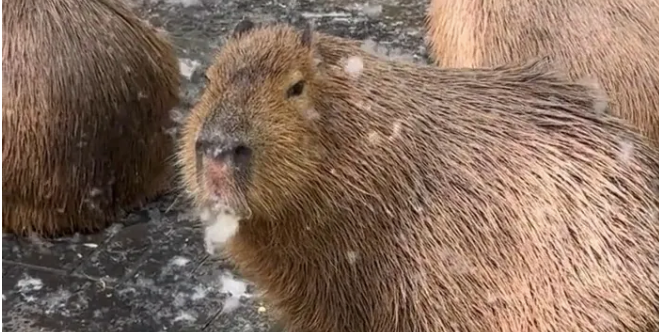
Recently, the capybaras at Beijing Wildlife Park have drawn online attention after being seen calmly chewing drifting poplar fluff, with many amused by their laid-back demeanor and others voicing concern over potential health risks.
Footage circulating online shows several capybaras sitting outdoors as white, cotton-like fibers float through the air and accumulate on the ground. One animal is seen slowly chewing the fluff that drifted to its mouth, appearing relaxed and unbothered.
Park staff said the fibers are non-toxic and composed of plant material that capybaras can digest. The animals are in normal condition, under routine veterinary care, and will continue to be monitored.
To manage the seasonal spread, the park has implemented measures including high-pressure water spraying and increased cleaning in visitor areas.
Today, rather than removing the trees outright, authorities are adopting science-based measures to curb the spread of fluff. These include planting male trees, grafting, and applying chemicals to inhibit flowering.