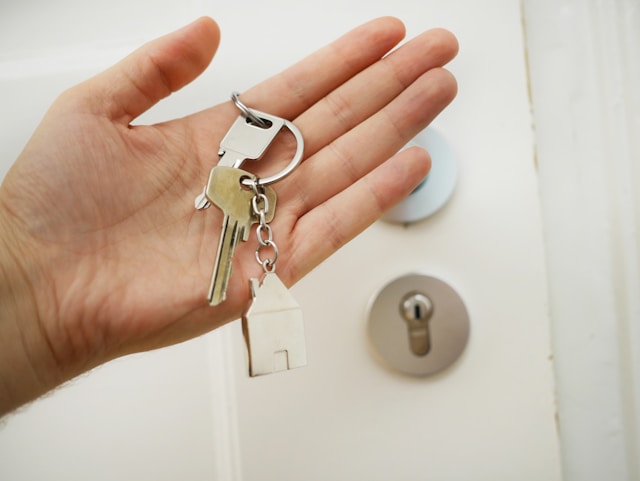
With a scarf dangling from your coat pocket and those gloves left behind at the coffee shop, there are simply more things to lose in winter. That's not counting your misplaced keys at home or those exasperated moments looking for your phone when you say, "I just had it!"
Try not to beat yourself up. Even Mark McDaniel, who has been studying human memory and learning for almost 50 years, left a hat under his chair recently at a restaurant. He doesn't usually wear hats, so he forgot it.
Luckily, there are strategies. If you can remember to implement them, here's how to stop losing things.
For things you use regularly
It helps not to have to remember where some things are.
Daniel L. Schacter, a Harvard University psychology professor and author of "The Seven Sins of Memory", suggested identifying problem items such as your phone, wallet or keys and creating a structure that becomes automatic with practice. He always leaves his reading glasses in a specific spot in the kitchen. When he goes golfing, his phone always goes into the same pocket in his golf bag.
"Maybe not always, but, you know, a very high percentage of the time," he said.
For things you don't use regularly
McDaniel said that the brain does a better job at remembering things when it receives several bits of information that can later be connected. Among memory researchers, it's known as elaboration.
One way to stop losing objects you don't habitually use — but often lose, like a hat — is to say out loud where you put it when you put it down. Verbalising does two things that help with retrieval.
"Saying it out loud creates a better encoding because it makes you pay attention, and the verbalisation creates a richer memory," McDaniel said.
The more detailed the elaboration, the more connections in the brain there will be to help you remember.
For something like your hat, imagine it in the location and connect it to a reason and a consequence: "I put my hat under the chair because I didn't want to get it dirty on the table, but I left it behind last time."
You might not remember to grab it when you leave, but you'll probably remember where you left it.