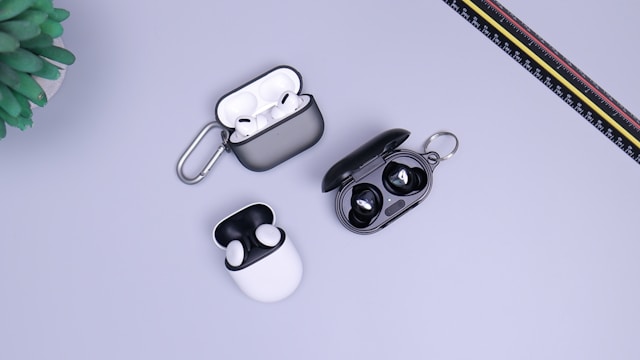
There's always that one moment in a song that never fails to give you goosebumps. Whether it's a heavy EDM bass drop, a soaring operatic aria, or an explosive guitar solo, the feeling is the same. These "musical chills" are a bona fide neurological phenomenon, engaging your brain's reward and pleasure centers.
While these shivers of auditory ecstasy are universal, the subjectivity of musical tastes makes them difficult to reproduce. Although Spotify's algorithm might seem clairvoyant, it can't actually read your mind. But what if it could? That's the question researchers from Keio University in Japan addressed in a study recently published in iScience.
To increase the frequency of music chills, neuroscientists built a "Chill Brain-Music Interface" (C-BMI). Using compact in-ear electroencephalography (EEG) sensors to monitor brain activity, the team aimed to build optimized, personalized playlists.
In the study, subjects listened to self-selected songs and tracks chosen by others while EEG sensors recorded their neural data. The researchers then built two models: one based on acoustic elements (similar to current streaming algorithms) and one based on the pleasure levels recorded by the EEGs. They combined these into a closed-loop system that generated playlists designed to either boost or decrease pleasure, with some versions incorporating real-time neural data.
The results were clear: playlists generated using neural feedback yielded significantly more chills and higher pleasure ratings than the standard "acoustics-only" method.
Beyond creating a more perfect playlist, the team believes this system could have important mental-health applications. "If this non-invasive system could be integrated with music-streaming apps, it could offer emotional support during commutes, before sleep, or in daily life," says Sotaro Kondoh, the paper's first author.
As long as you're okay with your earbuds reading your mind, your next playlist might know exactly how to give you the chills.