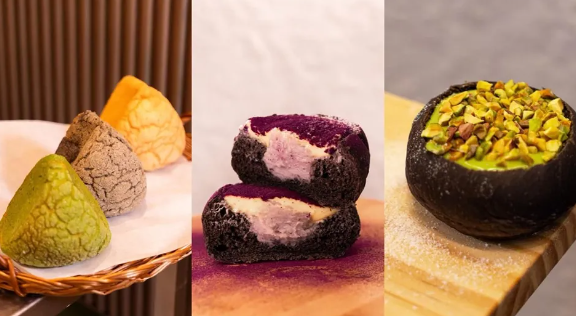
Who would have thought that the most valuable social currency in 2026 wouldn't be designer products, but bread!
Some bread lovers travel thousands of kilometers to try a unique flavor or viral bread trend; others camp out in front of their screens, waiting to press "purchase" on a flash-deal, desperate to be among those lucky enough to get the limited-edition of that carb-y treat.
In Wuhan, Hubei province, a bakery named "Bu Wan" received more than 12,000 orders within a five-minute online sale in September 2025. The buyers came from all over the country, and some buyers located overseas even chose to go through the complicated transshipment process to get a taste of the trendy loaves. Some netizens missing out on the group purchase have posted requests on social media, in the hope of finding someone who would like to transfer their orders, even offering to pay more.
Always wanting that special taste of home, bread enthusiasts living outside China will stock up on their favorite loaves, stuffing dozens or even 100 packs in their suitcases.
In Shanghai, a four-day bread festival in March sold over 800,000 bread items, with sales revenue exceeding 14.28 million yuan ($2.1 million). Another bread festival in Shanghai, which took place over two consecutive weekends in March, brought together more than 220 domestic and international baking brands, selling a total of 700,000 items. During these bread festivals, many aficionados posted their "must-buy lists" and "shopping guides" on social media.
Based in Zhuhai, a bakery named "You Jian Shan Hai" opts for online group purchases as its main sales channel, and usually attracts thousands of orders each time. Chiefly, the generous portions and the innovative, unconventional flavors are what attract so many consumers. The bakery has incorporated hometown flavors — such as Chaozhou's prawn roll and Shacha beef — into the pastries.
Wang Xiaoyi, a professor in the School of Management at Zhejiang University, noted that consumers don't just pay for flavor and ingredients. Brands build high perceived value through design aesthetics, scarcity, and emotional storytelling, thereby enhancing consumers' experiential value. Spending on expensive, artisanal bread has emerged as a form of self-expression and social display. Sharing consumption habits online brings social recognition to consumers. Purchasing a particular brand also serves as a "passport" that aligns with consumer aspirations for an exquisite lifestyle.
Along with the rise of new-style bakeries, a number of traditional bakery brands have gone out of business. Founded in 1993, Christine was delisted from the Hong Kong Stock Exchange in 2024, with all its thousand-plus outlets shuttered. BreadTalk closed down all its stores in Chengdu, Sichuan province, in July last year. In March this year, BreadTalk also quit the Beijing market.
The demise of prominent bakery chains is due to an inability to adapt to generational shifts in consumption and the transformation of marketing. Wang says delays in product innovation, an over-reliance on offline shops, neglecting e-commerce, and a lack of emotional value are to blame.
"Emotional value is a catalyst in the current bakery market. Yet, it's not a sustainable pillar for the industry," says Wang. For continued growth, the industry requires fundamental pillars, including the product's own strength and supply chain resilience. Without a solid business model, the emotional value will pop like a bubble.