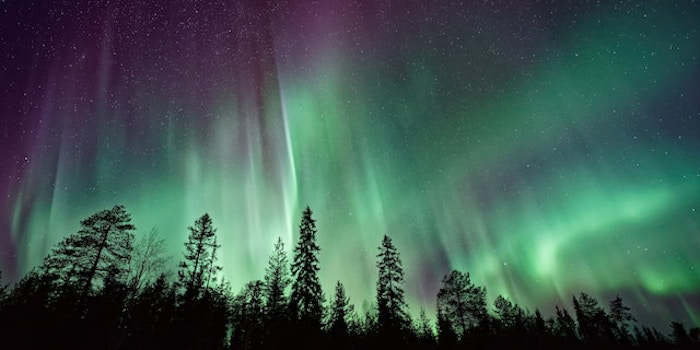
For centuries, the Aurora Borealis has captivated skywatchers with its shimmering curtains of green, red, and purple light. Yet despite being one of Earth's most recognizable natural phenomena, the Northern Lights remain surrounded by misconceptions. Some believe they occur only near the North Pole, while others assume they are caused by weather or that they always appear green. In reality, auroras are the result of complex interactions between the Sun and Earth's magnetic field, and scientists continue to uncover new details about how they form. Here are seven common myths about the Northern Lights and the facts behind one of nature's most spectacular displays.
Myth: The Northern Lights make no sound. Fact: Most auroras occur too high in the atmosphere for sound to travel directly to the ground. However, some observers have reported hearing faint crackling or hissing noises during intense displays. The phenomenon remains debated, but researchers have investigated possible explanations involving electrical activity close to the Earth's surface. While not fully understood, reports of auroral sounds are not dismissed as pure imagination.
Myth: The aurora is always green. Fact: Green is the most common aurora color, but it is far from the only one. Different atmospheric gases and altitudes produce different colors. Oxygen can create green or red displays, while nitrogen can produce blue, purple, and pink hues. During powerful geomagnetic storms, observers may see multiple colors at once, creating the spectacular multicolored curtains often captured in photographs.
Myth: Auroras only happen at the North Pole. Fact: The Aurora Borealis is most common near the Arctic, but powerful solar storms can push auroral activity much farther south. During major geomagnetic events, the lights have been observed across Europe, Asia, and even parts of the continental United States. There is also a southern counterpart known as the Aurora Australis, which occurs around Antarctica and southern high-latitude regions.
Myth: Auroras are unique to Earth. Fact: Earth is not the only world with auroras. Scientists have observed auroral activity on Jupiter, Saturn, Mars, and several other bodies in the Solar System. While the underlying mechanism is similar, charged particles interact with an atmosphere and a magnetic environment. The appearance and behavior of auroras vary significantly from planet to planet. Studying these alien auroras helps researchers better understand planetary atmospheres and magnetic fields.
Myth: The Northern Lights are caused by Earth's weather. Fact: Auroras are actually a form of space weather. They occur when charged particles from the Sun interact with Earth's magnetic field and collide with gases in the upper atmosphere. These collisions release energy in the form of colorful light. While clouds can block your view of an aurora, the phenomenon itself originates hundreds of miles above normal weather systems. Strong solar storms can even make the lights visible far beyond the Arctic.
Myth: If an aurora forecast is good, you'll definitely see it. Fact: A strong aurora forecast is only part of the equation. Visibility also depends on cloud cover, light pollution, moonlight, and your geographic location. Even during powerful geomagnetic storms, thick clouds can completely hide the display. This is why experienced aurora chasers pay as much attention to weather forecasts as they do to solar activity predictions.
Myth: The aurora is a modern phenomenon. Fact: Humans have been observing auroras for thousands of years. Ancient cultures across Scandinavia, North America, Asia, and Europe developed myths and legends to explain the mysterious lights. Long before scientists understood solar wind or magnetism, people associated auroras with spirits, omens, warriors, or celestial beings. Modern science has explained the mechanism behind the lights, but the sense of wonder they inspire remains unchanged.