Here is something you do every single day without ever thinking it is strange.
Your phone has two cameras. There is a very good one on the back, and a worse one on the front. And the worse one — smaller sensor, cheaper lens — is the one you point at your own face. Every selfie. Every video call. Every clip you have ever filmed of yourself.
Honor's new phone does not fix this with a better front camera. It fixes it with an arm.
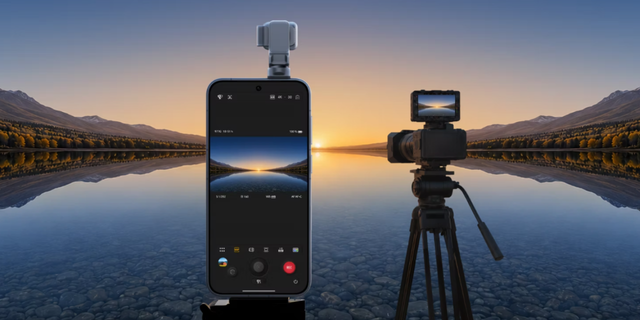
Press a button and a folding titanium limb rises out of the camera bump on the back, lifts a lens up above the screen, and turns it around to look at you. That lens is the main camera: 200 megapixels, large sensor, bright aperture. After fifteen years of smartphones, the good camera finally points the right way.
And once a camera can move on its own, a lot of small daily annoyances quietly disappear.
Think of the friend who ends up holding the phone in every group photo and appears in none of them. Or the trip you came back from with four hundred pictures, not one of them containing you. Set this phone down on a table, tap yourself on the screen, and the camera locks on and follows you — physically turning, panning, tilting, keeping you in the middle of the frame as you move around the room. It is not cropping into the picture the way your phone does now. It is actually looking at you, as if someone were holding it.
Or think of the last time you tried to film yourself cooking, propped the phone against a water bottle, and spent the entire video half out of shot. Or the walking video from your holiday that came out so shaky you never showed it to anyone. The arm cancels out your footsteps as they happen, and the motor turns faster than your body can move, so stairs, running and jumping all come out smooth.
It also reaches places your wrist cannot. Straight down over a bowl of noodles. Up above the heads of a crowd. A full circle. A slow 180-degree sweep across a view, performed on its own with one tap, while the phone sits perfectly still in your hand.
Then there is the night sky. Every photo you have ever taken of stars came out either black or smeared, because over a long exposure the sky drifts. This arm creeps along with the drift, so the stars stay as dots. Doing that normally involves buying a piece of astronomy equipment and sitting in a cold field with it.
The remarkable thing is how little you have to carry for all this. The motor doing the work weighs 2.6 grams, about the same as a coin. Honor says the whole mechanism is around 65 percent smaller than the pocket gimbals that creators lug about as a second gadget — the ones most people buy, use twice, and then leave in a drawer. The finished phone is 9.59 millimetres thick, barely thicker than an ordinary flagship, and in your hand it feels like one.
And then there is the part everyone mentions first, which has nothing to do with photography. The thing has moods. It nods. It shakes its head. It tilts toward whoever is talking, bobs along to music, and pulls faces at you on the screen. A journalist who spent two hours with it called the dancing pure gimmickry — and then admitted that talking to it was the best part of the afternoon. Say "turn left 45 degrees", or ask it to keep spinning for five seconds, and it just does it.
He was not sold on everything. For ordinary clips, he found the stabilisation other phones already do in software is not far behind. The plastic cover over the arm felt like something he could snap off by accident, and he wondered what happens when dust gets in while the arm is out. Fair questions. No phone has ever asked a motor to survive years of being shoved into a pocket with your keys.
It is also expensive — 9,999 yuan, around $1,500 — sold at home in small numbers, and Honor admits this is a showcase rather than a phone for everybody. The camera work will filter down into its ordinary models. The arm probably will not.
Dance is merely a trick - and that's why no one is willing to give it up. We spent fifteen years staring at those rectangular shapes that look back at nothingness. This one will raise its head when you talk to it.