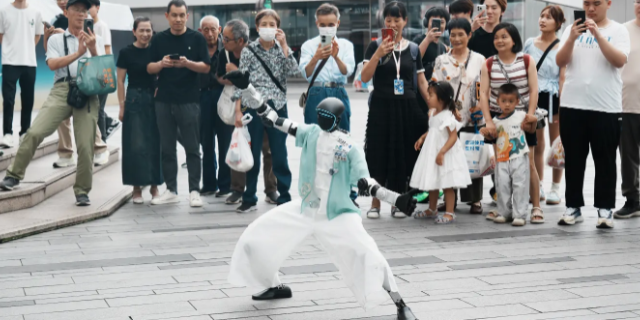
On Monday, a Chinese robotics company posted a video of its newest humanoid robot. The machine crouched, sprang, and landed two metres up — from a standing start, with legs only 0.85 metres long. It is called Superman, and the company says it can also run at 12.66 metres per second. For comparison, the fastest human ever timed, Usain Bolt, averaged about 10.4 metres per second over 100 metres.
Two days later, the company behind it — Unitree, based in Hangzhou — became the first humanoid robot maker to list on the Chinese mainland stock market. Its shares opened far above the offer price on Wednesday morning, trading at around six times the listing price, and the offering raised about 6.1 billion yuan ($905 million).
If the company name is new to you, its robots probably aren't. You have likely scrolled past one: machines doing backflips, dancing in formation, throwing kung fu kicks, or running a half marathon in Beijing alongside human runners.
Behind the videos sits a fairly practical product line. Unitree builds two-legged humanoids that walk and pick things up with dexterous hands, and four-legged robots — robot dogs — used for jobs such as checking sites for hazards. Its backers include the AI company DeepSeek and the tech group Tencent.
Why make a robot sprint?
Records look like showing off. Engineers describe them as something closer to a stress test. Pushing a robot to run, jump and land at its limit tests the motors, the joints, the balance system and the control software all at the same time — the same logic as crashing a car or flying an aircraft to its limits during development. You need to know where a machine fails, analysts say, before you can trust it with a real job.
Balance is the part that matters most. To land a two-metre jump, a robot has to coordinate many joints in real time and stay upright on impact without damaging itself. Get that right, analysts say, and you have a machine that could work where people shouldn't: unstable buildings after an earthquake, hillsides after a landslide, and other high-risk places.
That is why so much effort is going into the core technology rather than the choreography. Chinese robotics firms have been developing the mechanical design, the power systems and the AI control software in-house, and the past year has produced a run of firsts: 10 metres per second in April, two metres off the ground this month, and now the sector's first listing on the mainland market.
From demo to daily life
The industry is still early, and analysts are careful about it. One record does not mean the practical problems are solved. Progress arrives in small steps, and the harder work is moving these machines out of laboratory demonstrations and into complicated real-world settings.
That shift may be starting. Morgan Stanley nearly doubled its forecast for humanoid robot shipments in China this year, to 50,000 units, and expects trial projects to widen into larger deployments in the second half of the year. The bank puts the market at $2 billion now, and $15 billion by 2030.