You donate your sweater to a local charity
After you drop off your sweater at the thrift store, do you imagine a local needy family saying silent prayers of thanks to you, the benevolent donator? Sure, that could happen. And it's still helpful to donate your duds. Only 15% of clothing in the U.S. is recycled at all; the vast majority is just thrown away, according to the Secondary Materials and Recycled Textiles Association.
But unfortunately, most clothing donated to Goodwill and other charities doesn't end up on the backs of needy children in your community. They get sold to textile recyclers. Sure, that's better than a landfill, but if your sweater isn't picked up in a few weeks, it can end up as carpet padding, insulation or rags — or even sold overseas.
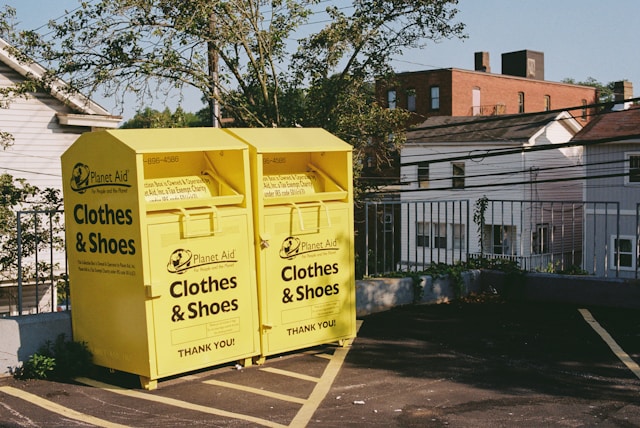
You slide your sweater into a roadside donation bin
Pulling over for a donation bin to send said sweater on its way? Be careful. Many of those bins are for-profit textile-recycling companies posing as charities — or relying on your assumption that they are legitimate charitable organizations by putting their actual company identification in very small print.
Since only a fraction of items donated to a brick-and-mortar charity get sold intact within the community, cutting out the middleman at Goodwill and other thrift stores may seem like a good thing. But this practice takes money away from legitimate charities.
You drop off that sweater at the store's take-back program
Retailers have in-store programs allowing customers to bring in worn garments. These are sorted to be donated or recycled, sometimes in exchange for a discount voucher.
If you think these fast-fashion retailers are making next season's clothes from last, that's not the case. Recycling old clothes into new ones weakens the materials, and in the case of the plastic-heavy fabrics of fast fashion, it's tough to separate fibers into their native components.
Nationally, less than 1% of clothing is recycled to make new clothes, but companies are trying to fill the gap.
You toss your sweater in the garbage with the rest of the trash
Nearly 85% of us dispose of clothing in the same trash where we dump our kitchen scraps, amounting to a staggering 17 million tons of textiles per year. Plastics, which make up the majority of fast-fashion clothing, can take hundreds of years to decompose, and the microplastics sloughed off the clothes end up in our waterways, soil and even our bodies.