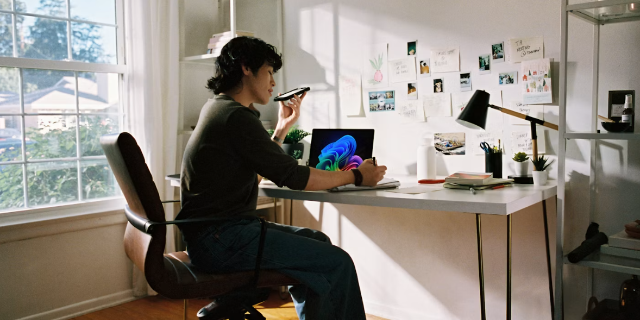
Every morning, Nicole Onyia sits down at her desk and begins working from home. About an hour later, she turns on her phone and starts a livestream.
For the next several hours, hundreds or sometimes thousands of people watch her work. Some keep the video open while answering emails, studying or completing their own tasks.
Onyia calls it "working alone together." The practice is also known as body doubling or parallel working.
The idea is simple: instead of working alone, you do your task while another person is present. That person does not need to help or even speak to you. Their presence alone may make it easier to begin a task and continue working.
Body doubling is not new. Students have long studied together in libraries, while office workers have shared rooms with colleagues doing completely different jobs. What has changed is that technology now allows people to find this kind of company online.
On TikTok and Zoom, users can join livestreams filled with people quietly working. Some sessions include music, regular breaks or a short period in which participants share their goals.
The arrangement may sound strange. Why would anyone want to watch a stranger type on a laptop?
For some remote workers, however, the quiet presence of another person creates a sense of responsibility. When everyone else appears focused, it can be easier to resist checking a phone or walking away from an unfinished task.
Onyia first tried the method when she wanted company while doing chores but none of her friends was available. She started a livestream, expecting only a few people to join.
Instead, she found that she completed more work than usual. Viewers also told her that the session had helped them concentrate.
The practice can offer something beyond productivity. Working from home may be convenient, but it can also feel lonely. Online work sessions recreate some of the atmosphere of a library, study room or shared office.
People do not necessarily have long conversations during these sessions. Simply seeing the same faces return each day can create a small sense of community.
Psychologist David Sitt said the basic idea resembles ordinary coworking. People often find it easier to follow a routine when someone else is nearby. Online sessions make that support available even when friends or colleagues cannot meet in person.
Still, body doubling is not a guaranteed solution. Formal research into the online version remains limited, and watching a livestream may distract some people rather than help them.
The method also depends on how it is used. A busy comment section, frequent conversation or constant notifications could easily become another reason to avoid work.
For people who want to try it, the simplest version may be best: choose a task, find a quiet partner or online session, and agree to work for a fixed period. The goal is not to watch the other person closely. It is to borrow a little structure from their presence.
Remote work has removed many of the small signals that once shaped the working day — the sound of colleagues typing, a friend opening a textbook or someone quietly getting started.
Body doubling brings one of those signals back. Sometimes, seeing another person begin is all the encouragement we need to begin too.