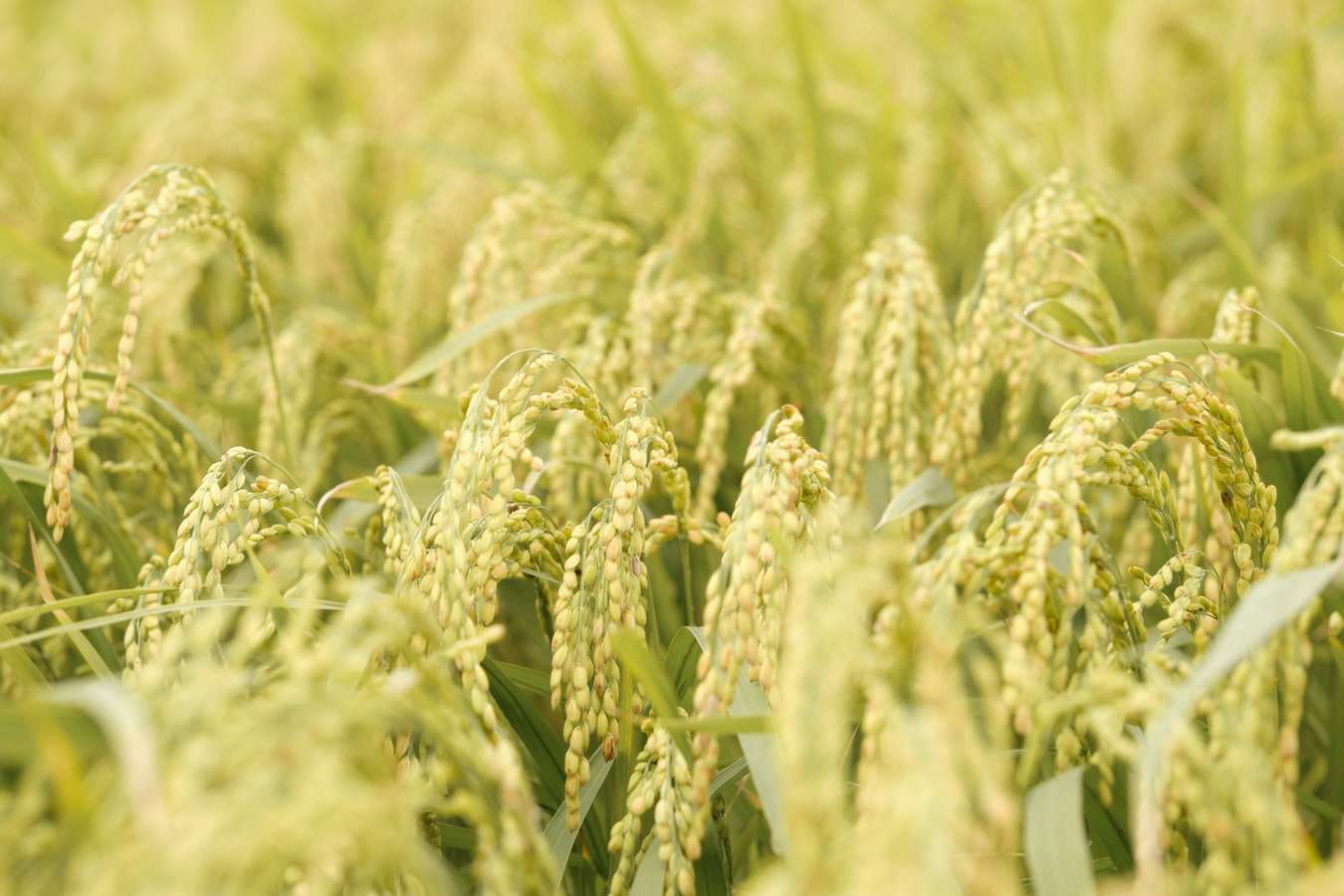
More than two months after arriving at the Tiangong space station, the Shenzhou XXIII mission crew has harvested its first batch of experimental rice, sown and tended entirely in orbit.
A video released by the China Manned Space Agency on Sunday shows the three astronauts — mission commander and spaceflight engineer Zhu Yangzhu, spacecraft pilot Zhang Zhiyuan and science payload specialist Lai Ka-ying — collecting the rice and packing the samples away.
The question behind the experiment is a plain one: if rice is bred generation after generation in space, is it still the same rice? To answer it, the crew is attempting the world's first continuous cultivation of two generations of rice in orbit, two complete life cycles back to back, so that scientists can work out how long-term exposure to microgravity affects the genetic stability of the plant. The project's formal title is rather less plain: "Molecular Mechanism Study on Multigenerational Genetic Stability and Environmental Adaptation Regulation of Space Rice".
There was an earlier world first, and it was a smaller one. In 2022, the Shenzhou XIV crew completed the first full life cycle of rice ever grown in space: six seeds spent 120 days in orbit and produced 59 first-generation space rice seeds, which came home with the astronauts. That was one generation, from seed to seed. This time the target is two, without the line ever returning to Earth in between.
Those 59 seeds are also why this crop has a family tree. The seeds carried up on Shenzhou XXIII are Chinese japonica varieties known for their tough adaptability and a growth cycle of three to four months, and they come in two kinds: ordinary seeds that have never left the ground, and direct descendants of the 2022 harvest, bred through three generations on Earth since.
According to China Central Television, they are planted in four independent cultivation units of six seeds each, 24 in all. The units are paired off into two groups, and each group tests a different method of rice reproduction. So the crop is sorted twice over, along two different lines: once by where a seed came from, and once by how it is bred.
The harvest is only the middle of the story. Along with the panicles and seeds, the astronauts are preserving stem and leaf samples at low temperature for the journey home, where scientists will take them apart in detail.
What the researchers are after is not one crop of rice but a production model, a repeatable way of growing food in orbit, which is what any future space agriculture will have to rest on. The samples now packed in cold storage are the evidence that model has to be built from.
The 2022 batch has already made that round trip once: down to Earth, through three generations of propagation, and back up to Tiangong, where the crew has just harvested its descendants. The seeds from this harvest have a different route ahead. They stay on the station, waiting to be sown for the second life cycle — the half of the experiment that has never been completed before.