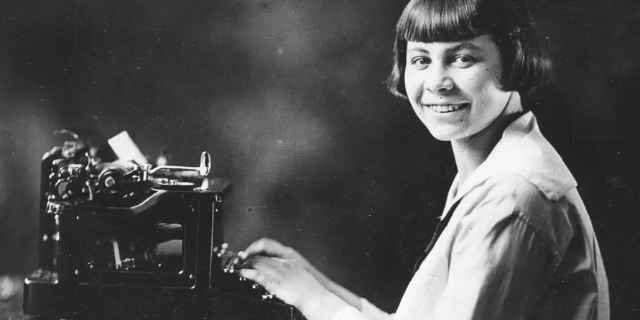
To create a typical American office in the 1920s, a lumberjack might first cut down the trees, while a bricklayer raised the walls. Once the building opened, a salesperson could fill its shelves and a typist would keep its paperwork moving.
A domestic servant might then return home from work to clean the house of one of those employees.
Together, these five jobs offer a surprisingly complete picture of American life a century ago. The country was building rapidly, buying more goods and discovering a new kind of workplace.
Bricklayers were essential to the decade's construction boom. Cities needed homes, factories, shops and offices, and brick was one of the main materials used to build them. New machines could produce as many as 12,000 bricks a day, but the bricks still needed skilled hands to turn them into walls.
Much of the wood used inside those buildings began its journey far from the city. Lumberjacks moved wherever forests were being harvested, cutting trees for houses, furniture, paper and fuel. The work was physically demanding and dangerous, so workers often formed close communities in remote logging camps.
Inside many homes, another common occupation was already disappearing.
Domestic service — including work as maids and housekeepers — remained an important source of employment, particularly for women. However, fewer people wanted jobs that often required them to live in their employer's home. As shops and offices offered more alternatives, households found it increasingly difficult to hire servants.
The same economic changes created more work for salespeople. The prosperity of the 1920s encouraged businesses to sell a growing range of products. Some salespeople worked behind shop counters, while traveling salesmen carried products and persuasive speeches from town to town.
Then there were the typists, whose clicking machines supplied the soundtrack of the expanding office world. Many worked alongside stenographers: one person recorded speech in shorthand, and another turned those notes into neat, readable documents. Typing opened new employment opportunities for women, although the work could be repetitive and tightly supervised.
Some of these occupations still exist, but their place in society has changed. Bricklayers and logging workers now use more advanced machinery. Domestic service has taken different forms. Sales has moved online, while the typewriter has largely become a decorative object.
The list reveals more than what people did for money. It shows what the country needed most: buildings, timber, household labor, consumer goods and mountains of paperwork.
A century from now, today's job titles may look equally revealing — and perhaps just as strange.