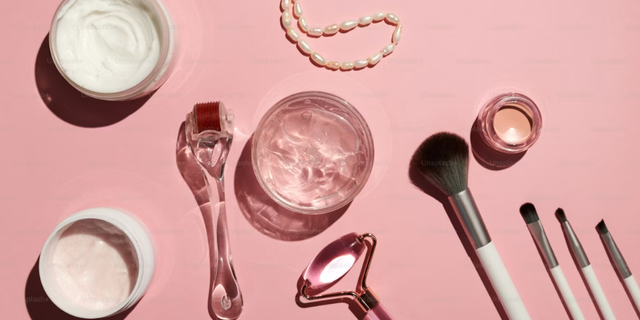
From Xiaohongshu to TikTok, and from bloggers to everyday users, a growing number of foreign faces are sharing their stories of discovering C-beauty — also known as guohuo meizhuang, or made-in-China beauty.
In one video by beauty influencer Mikayla Nogueira, she holds up makeup products from Flower Knows, a Chinese brand targeting younger consumers, and exclaims: "This has to be one of the craziest makeup brands I've ever seen!" After applying the products, she's completely won over. "I'm obsessed with the brand, I want more."
On the lifestyle platform Xiaohongshu, a French woman named Sarah lays out her haul from Shanghai before returning home: lotions, perfumes, eye shadow palettes, lip glosses and face masks — all from Chinese beauty brands. "I always knew Chinese products were good, but buying them in person made me realize just how incredible the quality is," she said. "They're such a treasure to discover — so good that I want to fly back to China immediately to restock."
For many, the appeal of Chinese beauty brands lies in their authentic integration of traditional Chinese elements. Thais Teixeira Mendes, a 28-year-old Brazilian master's student at Shanghai Jiao Tong University, has attended almost every beauty expo in Shanghai, testing products from major and niche domestic brands.
"Many ingredients have been used traditionally for hundreds of years and are embedded in Chinese culture," she said. Chinese herbals such as ginseng, Chinese angelica and green tea, listed in ancient medical classics, are now widely used in domestic beauty products. Today, at least half of Mendes' daily makeup routine involves Chinese brands.
More overseas tourists and expats are also seeking out Florasis, one of China's leading cosmetics brands. Its offerings — from makeup palettes to lipsticks — are defined by exquisitely crafted details rooted in Chinese traditional aesthetics.
Gabby Chen, president of global expansion at Florasis, said many overseas consumers now view Chinese beauty as a "cultural keepsake." "They shop not just for function, but to learn about design inspiration and cultural stories," she said. "Overseas consumers' perception of Chinese beauty brands is shifting from 'Made in China' to 'Created in China.'"
The Shanghai-based Chando Group, focusing on tech-driven skin care, now operates in 15 countries and regions. Zhang Yinggui, general manager of its overseas sales department, attributed the rising global recognition to breakthroughs in independent research and a differentiated Eastern philosophy.
Behind the overseas push is a solid domestic industry. According to the Hurun Research Institute, half of the country's top-listed beauty brands were established after 2015. In Shanghai's Fengxian district, the Oriental Beauty Valley is transforming into a hub for China's cosmetics industry. Flexible magnetic levitation production systems and AI-powered unmanned workshops allow Fengxian to meet surging demand while taking on high-end orders from leading international beauty companies.
While the market once focused on China's manufacturing prowess, Chinese brands' original design, R&D and cultural expression are now gaining wider recognition — and that's a beautiful thing in itself.