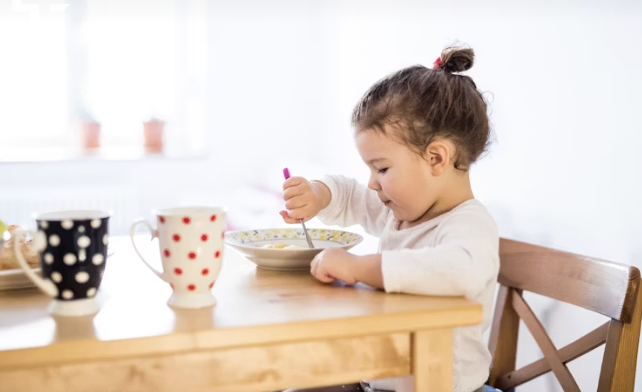
If you've ever worried about your child's eating — or their weight — you're not alone. Many parents feel caught between wanting to protect their child's health and not wanting to create stress, conflict, or shame around food. In that moment, it's natural to tighten control. We remind them to take another bite of vegetables, suggest they've had enough, or quietly track how much they're eating. It comes from love.
But what many parents don't realize is that these strategies often backfire. Over time, pressure and restriction can make children more focused on food, less aware of their hunger cues, and more resistant at meals. The good news is that there's a different approach — one that's calmer, more effective, and easier to sustain. It doesn't rely on control. It's built on structure, connection, and trust.
When Less Control Leads to Better Eating
Children do not respond well to constant correction at the table. When eating becomes something they are monitored or judged for, it stops being intuitive and starts feeling stressful. Research in child feeding shows that when adults try to control how much children eat, kids often do the opposite. They may avoid foods they're pressured to try, or become more interested in foods that feel limited.
This doesn't mean parents should step back entirely. Children still need guidance. But instead of controlling intake, we can create an environment where healthy habits develop naturally. And that begins with structure.
Why Routine Matters More Than Rules
Children thrive on predictability. When meals and snacks happen at regular, expected times, something shifts. Kids come to the table ready to eat, and they stop asking for food all day long. They begin to trust that more food is always coming. This rhythm helps regulate appetite without constant reminders or corrections.
You may notice your child eats a lot at one meal and very little at another. That's not a concern — it's normal. Over time, their bodies balance out what they need. Having a routine also removes one of the hardest parts of parenting around food: deciding in the moment whether your child is "really hungry." The structure answers that question for you.
Shifting the Mealtime Dynamic
Along with routine comes an important mindset shift. Parents decide what is served, when it is served, and where meals happen. Children decide whether to eat and how much. At first, this can feel uncomfortable, especially if you're used to guiding every bite. But it's a powerful change. When children are allowed to listen to their own hunger and fullness, they begin to develop trust in their bodies. Mealtimes become calmer.
Instead of negotiating bites or portions, you can focus on being present. Families who eat together regularly — no matter what's on the table — tend to have children with better eating patterns, stronger communication, and healthier attitudes toward food. It's not about the perfect meal. It's about the shared experience.
Creating a More Relaxed Relationship With Food
Many parents worry that if they stop encouraging or limiting food, their child will make poor choices. In reality, children do better over time when pressure is removed. You don't need to convince your child to try new foods. Simply offering those foods again and again — without pressure — builds familiarity. Eventually, curiosity takes over.
There's also no need to label foods as "good" or "bad." When certain foods are placed on a pedestal or made off-limits, they become more attractive. When all foods are allowed in a balanced way, they lose that power. Instead of striving for perfect meals, aim for balance over time. Include familiar foods your family enjoys, alongside opportunities to explore new ones. This helps children feel comfortable and open, rather than controlled.
Making It Work in Real Life
Healthy eating doesn't require complicated plans. Structure can come from gentle boundaries: snack time happens at a set time, and the kitchen closes at a consistent hour in the evening. These kinds of limits create predictability without feeling restrictive. Cooking at home more often can be simple — familiar staples your family already enjoys, with small opportunities to try something new alongside them.
Keeping the Bigger Picture in Mind
It's easy to get caught up in the details of what your child eats each day. But the bigger picture matters more. When children grow up in a home where meals are predictable, food is not stressful, and their bodies are respected, they gain something far more valuable than short-term eating habits. They learn to trust themselves. They learn that food does not need to be controlled or feared. They learn that their body is something to listen to — not fix. Those lessons stay with them long after childhood.
You don't need to overhaul everything at once. One small change is enough. Maybe it's setting a regular snack time. Maybe it's sitting down together for one meal this week. Maybe it's deciding to stop commenting on how much your child eats. These small shifts add up. Raising healthy kids is not about restriction. It's about creating a home where food feels steady, safe, and shared.