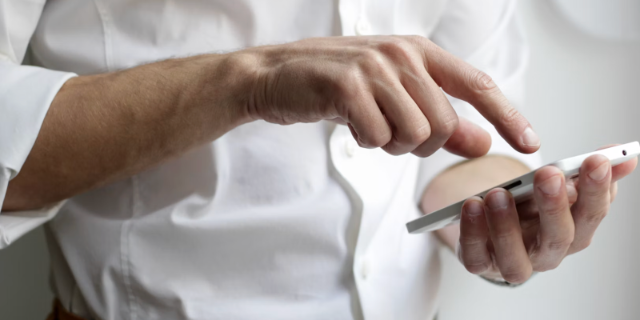
Your phone rings. You recognize the number, and there is no reason to worry. Yet instead of answering, you watch the screen until the call ends — and then send a message asking, "What's up?"
For many people, especially those who mainly communicate through messages, an unexpected phone call can feel surprisingly uncomfortable. Some call this "telephobia," although the word is often used loosely to describe nervousness about making or receiving calls.
The problem is not necessarily the conversation itself. It is the lack of time to prepare.
A text message allows you to pause, choose your words and rewrite a sentence before sending it. Even voice messages can be recorded again if something sounds wrong. A live phone call offers none of these comforts. The other person is waiting, silence feels awkward, and every response must be produced immediately.
Calls also provide fewer social clues than face-to-face conversations. You cannot see whether the other person is smiling, confused or in a hurry. Without facial expressions and body language, a short pause may feel more serious than it really is. People who worry about being misunderstood can therefore become unusually aware of every word they say.
Modern technology has made avoidance easy. Restaurant tables can be booked online, appointments can be arranged through apps, and questions can be answered by chat services. As phone calls become less common in daily life, people receive fewer opportunities to practise them. The skill may then feel harder simply because it is unfamiliar.
Nottingham College in the UK decided to address the problem with phone-confidence training. During practice sessions, learners role-play common situations and make simple calls to local businesses. They might ask when a shop closes or whether a restaurant has an available table.
These exercises sound almost too easy, but that is the point. A low-pressure call lets learners discover that small mistakes are rarely disastrous. A forgotten word can be replaced. An awkward pause passes quickly. Most people on the other end of the line are not judging the caller's performance.
Preparation can also make calls easier. Before dialing, it helps to write down the purpose of the call, the key information you need and a simple opening sentence. Starting with short, predictable conversations can build confidence before more important calls, such as arranging an interview or speaking with a customer.
Preferring texts is not a personal weakness, and telephone confidence is not something everyone naturally possesses. It is simply a communication skill — and skills improve through use.
The hardest part may be pressing the call button. After that, the conversation is often much less frightening than the one you imagined.