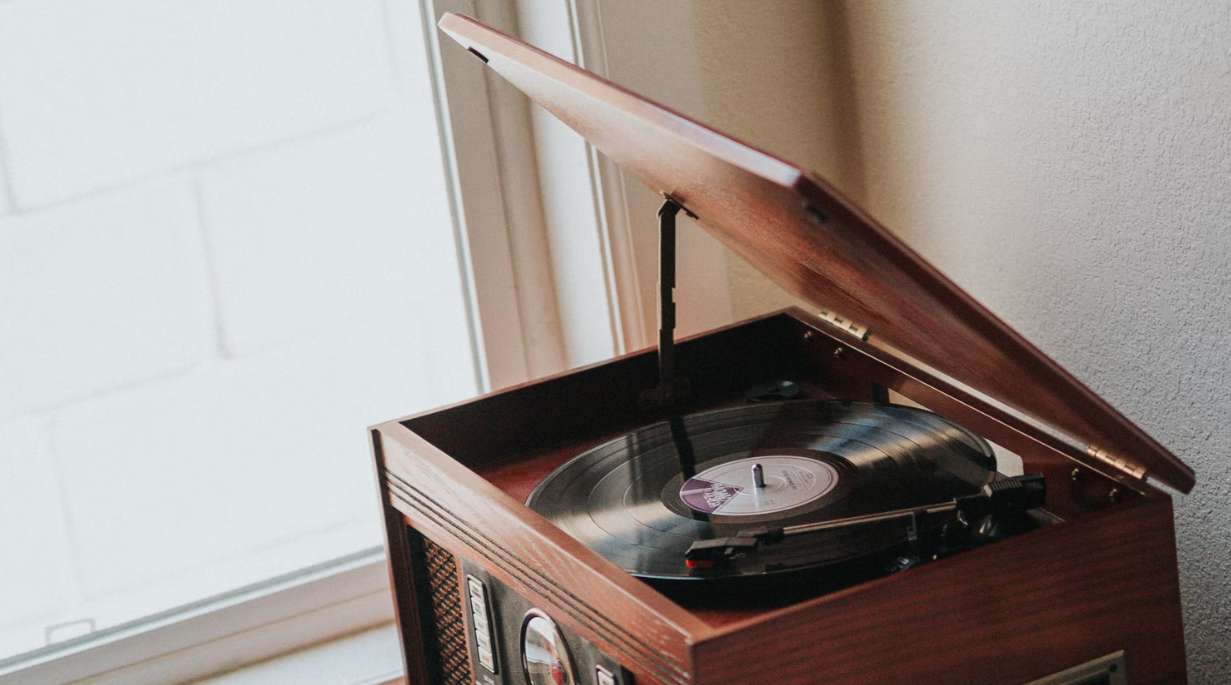
On December 7, 1877, Thomas Edison placed a metal device on a desk at a New York science magazine and gave the crank a turn.
The machine spoke. "Good morning," it said in Edison's voice. "How do you do?"
Weeks later the magazine's editors described the demonstration. "There can be no doubt," they wrote, "but that the inflections are those of nothing else than the human voice." Virtually overnight, the article established Edison's phonograph as the first machine to record and reproduce human speech.
But was it?
In May 2026, audio historian Patrick Feaster proposed another candidate for the title — a recording machine that would have preceded Edison's by nearly a century.
Feaster began investigating more than 20 years earlier, when a German article from the early 1900s mentioned a man known only by his last name, Müller, who had exhibited a talking machine in the 1780s. The article branded it an obvious hoax, but Feaster was intrigued.
Over the following two decades he uncovered more references to Müller's "speaking machine," including an 1788 book — the same year it was exhibited in Erlangen, Germany.
Two eyewitness accounts agreed on the details: a cabinet flanked by two life-size human figures, one male, one female. Each figure rested a hand on the cabinet, which held 34 "speech mechanisms" resembling organ pipes, along with levers, rollers and 10 bellows. But other accounts described Müller's device as a puppet that conversed with audiences.
In January Feaster made a startling discovery: there were two Müllers, and both demonstrated speaking machines in Germany in the 1780s. (Neither device has survived.)
One of them, Laurentius Müller, did indeed employ a speaking puppet, and it was documented as a hoax. The other Müller, Georg Theodor Jacob Müller, was a devotee of medicine and mechanical sciences. Feaster was impressed by several contemporaneous accounts of his machine, including a testimonial by physicist Johann Tobias Mayer.
According to Mayer, sounds passed from the top of the machine through tubes that carried the vibrations up the arms of the two figures and into their mouths, producing distinct male and female voices.
The machine's repertoire included answers to 12 riddles, passages from books, laughing and crying sounds, and arias sung in both male and female voices — all feats that Edison's phonograph would one day accomplish by recording and playing back the human voice.
"Everyone assumed that no machine could really do what Müller's was supposedly doing," Feaster says.
Two features, however, suggest the device wasn't a hoax. Müller mentioned that his machine used an artificial ear, a mechanism simulating the human eardrum, used in the 1780s as a hearing aid. An artificial ear could have been part of a recording device.
The second notable feature involved an echo. When audience members spoke three or four words into the ear of one of the figures, they heard what appeared to be those same three or four words in their own voices after a delay. A natural echo with a delay long enough for those words to be enunciated clearly would require a bigger volume of space than the interior of Müller's cabinet. So if the repeated words weren't an echo, Müller might have employed some kind of mechanical technology to record and play them back.
For now, Feaster says, the evidence that Georg Theodor Jacob Müller created some version of a phonograph remains intriguing, inconclusive — and elusive. That doesn't mean he's giving up. This week Feaster is in Germany to hunt for more clues.