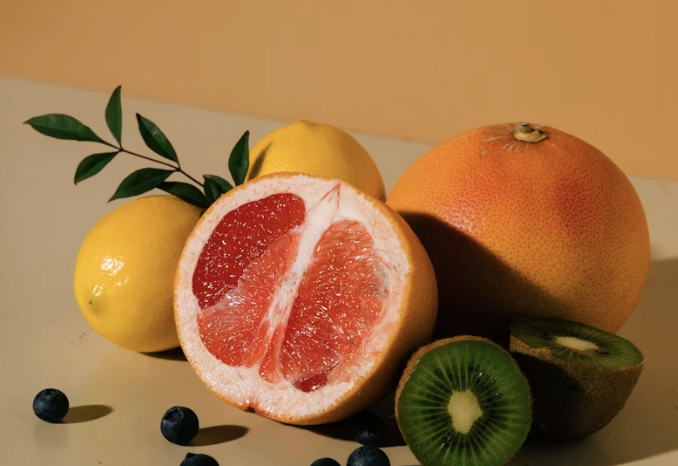
If it is possible, in this fascinating age, to be a celebrity fruit, the Sumo Citrus is definitely a celebrity fruit. The oversized mandarin hybrid is by far the most popular new member of the citrus family. Every winter, piles of them appear at grocery stores, and many times the store would be half sold-out before sunset. Sumos are discovered anew every season on social media, where people talk about their adorable bumpy heads, their generous size, and — oh! — their sweetness.
Food scientists measure sweetness using the Brix scale, which indicates the percentage of sugar in a fruit's juice. The average grocery-store mandarin orange falls somewhere from 8 to 11 degrees Brix. Sumos have been known to reach up to 18.
The American grocery-store produce aisle is sweeter than it has ever been. Cotton Candy grapes are a $100 million concern, with competition from a slew of other designer grapes with trademarked names: Candy Heart, Sweet Sapphire, Gum Drops. But even the non-name-brand fruit is sweeter than it used to be, and getting more so all the time. Today's grapefruit are less bitter than the ones your grandparents ate, having had the compound that creates bitterness largely bred out of them.
Some years ago, zookeepers in Melbourne noticed something alarming — the red pandas in their care were developing tooth decay. The zookeepers had been feeding the animals commercial fruit in an attempt to mimic the diet they'd have in the wild, but it was so high in sugar that it was rotting their little teeth. Humans had manipulated nature to such a degree that nature could not keep up.
These sweeter fruits are the products of selective breeding — the tedious, iterative work of combining different varieties' DNA over and over, letting the desirable genes survive and the less desirable ones die off. In the grocery store, "better" typically means sweeter. In 1862, Henry David Thoreau described wild apples as "sour enough to set a squirrel's teeth on edge and make a jay scream." Fruit was just something that grew on trees, not a multibillion-dollar global business. But over time, farming was professionalized, and nature's sour unruliness was bent to humanity's will.
Cultural changes enabled this appetite too. Concerns about processed sugar have turned people toward fruit, which feels virtuous even when it tastes like candy. In a convenience-obsessed culture, fruit is increasingly pitched as portable food — and if you're competing for taste buds with gummy candy, there's a lot of incentive to try to taste like it.
Not everyone is happy about this. The chef Alison Roman recently noticed that the blueberries she was feeding her toddler were sweet and wan, with no acidity. Recipe developer Claire Saffitz has found something similar with watermelon: "so incredibly sweet," she said, but also, somehow, less watermelony.
Sweetness is, from a genetic standpoint, probably the least complex of the flavors. The microscopic compounds that make melon melony and grapes grapey are far more fragile than sugar — they don't survive well in the cold, or for long, and the journey from a farm to your bowl is nothing if not cold and long. Acid, meanwhile, is risky. "If you're in the fruit-selling business and you sell somebody something that's sour, you're going to lose money," Courtney Weber, a berry horticulturist at Cornell, told me. Sweetness is simply safe — easier to breed for, easier to control, easier to love.
Kate Lebo, a baker and writer, loves quince — a relative of the pear and the apple, but much less sweet, with a sourness that is nearly inedible raw but transforms into something sublime and floral when cooked. Many scholars believe it was a quince, not an apple, that Eve ate in the Garden of Eden — the fruit that showed her the world in its sharp complexity, its pleasure and pain. It is supposed to be sour.
The wild apples of Thoreau's time are mostly gone. "I miss fruit tasting like fruit," Saffitz told me. We traded complexity for convenience. We wanted watermelon in January, and we got it. But somewhere along the way, something was lost.