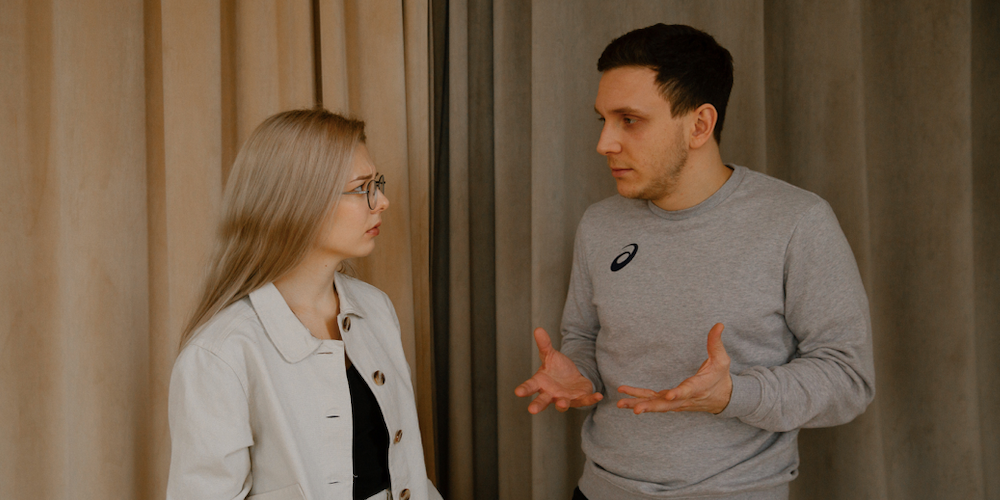
People in four online studies reported stronger negative emotions when they believed someone else was wrong than when they saw the disagreement as a difference of opinion. In one study, those who were more convinced that the other person was wrong also said they would be more likely to avoid them.
For years, researchers have used the concept of "belief homophily" to describe people's preference for spending time with those who think like them and their discomfort with different views. The idea has been used to explain why social media feeds can become "echo chambers" full of opinions we already agree with. A study published in Political Psychology suggests that how people interpret a disagreement may help explain why some disagreements are more upsetting than others.
The authors suggest that people may be relatively comfortable with a difference in opinion when they are uncertain who is right. Believing that the other person has a false view of reality may be more upsetting. One possible explanation is that it threatens our sense of a shared reality. Another is that we worry the person will act on that belief and make poor decisions. The studies focused on people's reactions to disagreements, so these explanations remain possibilities.
Andras Molnar of the University of Michigan and George Loewenstein of Carnegie Mellon University examined responses from 2,027 adults in the United States. The four studies asked participants to recall disagreements, react to hypothetical social media posts, or imagine how they would feel in a given situation.
In the first study, participants recalled a disagreement and reported their feelings before describing the other person's belief as either "incorrect" or "different." Those who saw the belief as incorrect reported more frustration and upset and said they felt less calm. In the second study, the researchers assigned participants to recall a disagreement involving one of those two kinds of beliefs. The pattern held across both studies. Greater confidence that the other person was wrong went with more distress. Confidence that the other person's view was different did not predict the same response.
In another study, participants stated their views on a set of divisive issues and read a hypothetical social media post expressing the opposite view on one issue. Those who were more convinced that the author was wrong reported more distress and said they would be more likely to block the author or avoid interacting with them. They were also less willing to have the author as a neighbor, colleague, family member, or romantic partner.
The final study tested whether the wording alone could influence reactions. Participants were randomly assigned to see one of two reminders about a hypothetical disagreement. One reminder described the other person's belief as "different," and the other described it as "incorrect." For any given scenario, everything else stayed the same. On average, those who saw "incorrect" said they would feel more disturbed.
The researchers relied on people's accounts of their own feelings and on recalled or imagined situations. The reactions therefore tell us how participants felt or expected to feel, while their answers about blocking or avoiding someone describe what they said they would do. Recalled disagreements also tended to be milder than the more divisive scenarios used in the later studies. All participants were recruited online in the United States, so the findings may not apply in other cultural contexts.