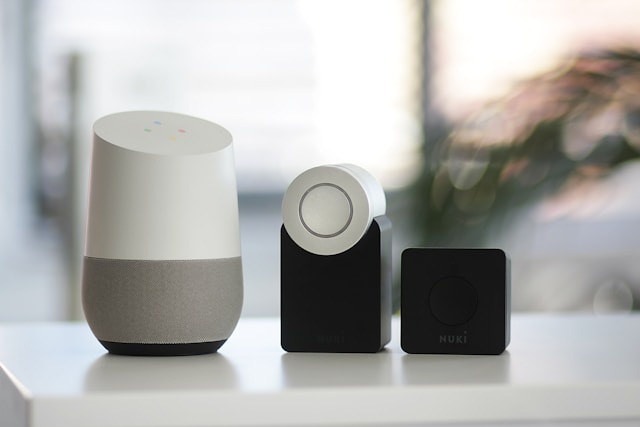
My folks are visiting me in Southern California for a couple of months, so I rented them a house down the street. All of the appliances and systems are brand-new. Rows of programmable buttons sit where traditional light switches would normally be.
It's all state-of-the-art. And it's terrible.
Light switches apparently now come as an unlabeled multibutton panel that literally required a tutorial session from a technician. Pressing the same button twice might turn the lights on and off, or you might have to press one button for on and another for off. "It depends" is the name of the game — which is exactly what you don't want when you're trying to find the bathroom in the middle of the night.
The TV is a recent model from Samsung. The picture is great, once it finally boots up. And of course you can't simply turn the TV on to find the last channel you were on; you have to navigate a menu of countless apps you probably don't subscribe to. Watching TV feels more like a cognitive test than a way to relax.
The kitchen is also pointlessly complicated. My mom, the rental-company-supplied tech guy, and I stood around the Miele dishwasher. Finally, we noticed a QR code, along with a note encouraging us to register the appliance with an app. Wait — was that required to turn it on? The oven was equally perplexing. The controls are obtuse icons with no tactile feedback, hidden behind smoked black glass.
On to the thermostats. When we got there, it was hot. We finally managed to select the temperature we wanted only to discover that a preset schedule overrode our choice, and we'd have to figure out how to override that.
The alarm system is operated in two places — from a device near the front door and another in the primary bedroom — by what are essentially iPads bolted to the wall. We have no idea how to operate these new screens. But they are screens, so they have to do something. Day and night, they show us the weather forecast.
Even getting inside the house is complicated. A digital lock on the front gate requires a four-digit PIN. Mercifully, you can ignore both the dead little computer bolted to the gate and the functioning one nearby it because the gate also comes equipped with a keyhole, and a key you can stick inside.
On top of all this tech floats a layer of lag. Flip an old-school light switch and the light comes on instantly. Tap an old-school remote and you're watching TV. Press a button on these new systems and there's a long pause before something happens — if anything happens at all.
I'm no Luddite. I run a software company! I see the allure of high-tech gadgets and have fallen for their promises before. When my wife and I built a house more than a decade ago, we opted for all kinds of automated systems. We regretted it almost immediately. What we discovered is that this stuff requires setup, which can take more time than just doing things manually, and is maddeningly glitchy, forcing you to pay someone handsomely by the visit or the hour to fix your appliances for you.
Tech makes many things better, but you shouldn't have to learn how to use a house. You shouldn't need a tech tour and an app (or five) to turn the heat down or clean the dishes. You shouldn't have to worry that pressing the wrong button will set off a chain of events you don't know how to undo. All these powerful processors and thousands of lines of code have succeeded in making everyday things slower, harder to use, and less reliable than they used to be.
Maybe the technology is still in its primitive stage, some breakthrough will come, and tricked-out houses will soon work seamlessly, removing friction and frustration from everyday tasks. But I wouldn't bet on it. A light switch used to have one job, and it either did it perfectly or it was very easy to find out why it didn't. Today's digital replacements are too sophisticated for their own good. They're hard to integrate with one another and even harder to troubleshoot when they don't work. Is it this thing? That thing? Both things? Something else entirely?
My wife and I are in the middle of another home renovation, and this time we've decided to go the good old analog route: switches you flip, dimmers you turn, and thermostats with a pin pointing at a number on a dial. That's what I call progress.