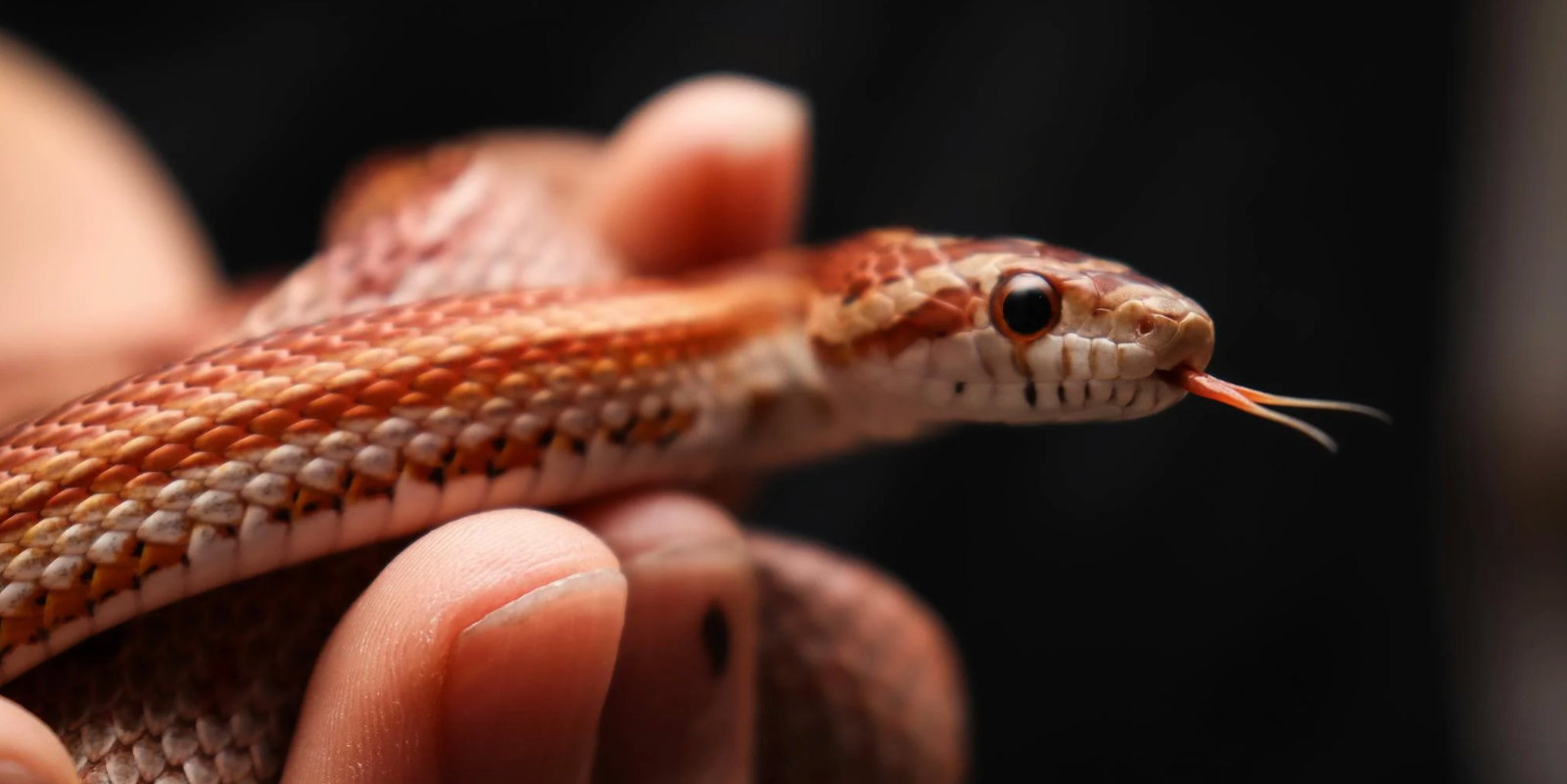
Though fearsome predators, snakes can go weeks or even months without eating. Now, scientists think they may know how they do it. Snakes have lost the genes to produce ghrelin, a key hormone that regulates appetite, digestion, and fat storage, researchers report today in Royal Society Open Biology.
Chameleons and a group of desert lizards called toadhead agamas that also have huge spaces between meals have also lost the same genes, hinting that cutting off ghrelin is a key way to excel at fasting, possibly by suppressing appetite and holding onto fat stores.
"I give the researchers a lot of credit for looking more deeply into the data that was staring us all in the face — myself included," says Todd Castoe, a genomicist at the University of Texas at Arlington not involved with the study. The hormone is ubiquitous across vertebrates, from fish to mammals. So finding that reptiles have repeatedly ditched it is "pretty remarkable," he says.
When scientists first discovered ghrelin nearly 30 years ago, they thought this "hunger hormone" could be key to fighting obesity in humans. But it hasn't been that simple. Since then, researchers have found that ghrelin has a complicated role within a network of hormones constantly tweaking hunger and energy stores. And even though ghrelin is commonly found in vertebrates, it's been unclear how it has evolved across various groups of vertebrates.
So in the new study, Rui Resende Pinto, an evolutionary biologist at the University of Porto, and his colleagues focused on reptiles, many of which can go long periods without food. The researchers scanned the genomes of 112 species. In snakes, chameleons, and toadhead agamas, ghrelin genes were either missing or so warped by mutations they could no longer encode the hormone, the team found. The degree of the genes' erosion also varied considerably between snake families: Some snakes such as boas and pythons had malformed ghrelin genes, but others, such as vipers, cobras, and their relatives, barely had anything left.
"We were getting fragments, just small pieces of the sequence," Pinto says. This difference between snake groups, he adds, may mean ghrelin was lost numerous times within snakes alone.
When the researchers looked at MBOAT4, an enzyme that makes ghrelin function, they found that it, too, was lost in snakes, chameleons, and the agamas.
Losing ghrelin and MBOAT4 may have been part of how these ambush predators adapted to a boom-and-bust feeding schedule. Normally, ghrelin can help the body turn fat into energy when food is scarce. Without ghrelin and MBOAT4, the reptiles may be able to hold onto their energy reserves for longer, letting them persist in low power mode for months to a year between meals, Pinto says. Dealing with typical appetite cues may have also made it harder to adapt to long fasting periods. Being able to sit still and not seek food may have allowed these reptiles to spend less energy when fasting.