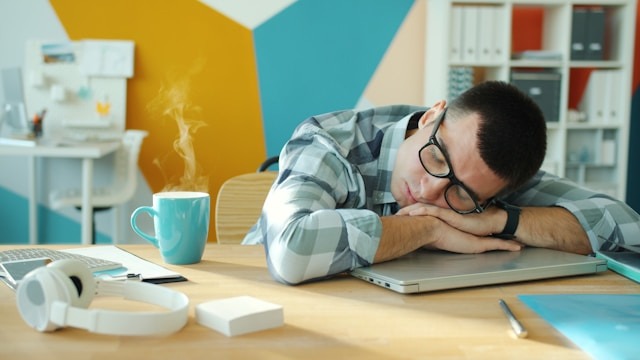
Sleeping during the day is usually the preserve of shift workers and cats. But the science suggests that office workers can benefit, too. A randomised controlled trial in 2023 found that nappers woke up with improvements to mood, alertness and memory. Napping habitually might also be wise. A study from 2007 by the Harvard School of Public Health found that healthy adults who took regular naps had a 37% lower risk of dying from heart disease compared with non-nappers. One published in 2003 in Sleep Health suggested that habitual napping could even add years to your life by slowing the rate at which your brain shrinks with age.
Timing is crucial, though. Sleep scientists tend to agree that a short "power" nap, somewhere between ten and 30 minutes, is best. For example, in 1994 NASA found that a 26-minute power nap enhanced pilots' physiological awareness and performance. Sleep for too long and you enter the deeper phases of the 90-minute sleep cycle and wake up feeling groggy. You may also struggle to fall asleep at night.
Taking longer naps on a regular basis could even have deleterious effects. A meta-analysis in 2016 concluded that daily naps lasting more than an hour increased the risk of developing diabetes and associated cardiovascular trouble. And a study involving 1,400 participants in 2023 found a link between frequent extended naps and a higher risk of developing Alzheimer's. An alarm clock is a vital tool for the health-conscious.
Some sleep experts contend that humans are biologically disposed to nap. They point to a natural dip in alertness after midday, caused by fluctuations in the circadian rhythm. Studies which find that power naps do not disrupt night-time sleep also appear to bolster the case for kipping twice a day. In cultures where this is common, however, nappers must nevertheless rest at night for the recommended seven hours.
What types of health consequences, asks Matthew Walker, a neuroscientist, in "Why We Sleep", have been caused by humans' abandonment of biphasic sleep (the practice of splitting up daily slumber into two chunks)? Many people recognise the feeling of post-lunch lethargy; few give into it. Nowadays falling asleep in the middle of the day is not always practical — workers have little opportunity to take a voluntary break from consciousness. Some opt for micro-sleeps instead. But the research suggests that the benefits of getting less than five minutes of shut-eye wear off quickly.
Coffee is a popular antidote to midday drowsiness. A nappuccino might work better. A study published in 2008 found power naps to be more effective than caffeine at improving alertness and memory. Research published last year suggested that a midday doze could even reverse the effects of a bad night's sleep.