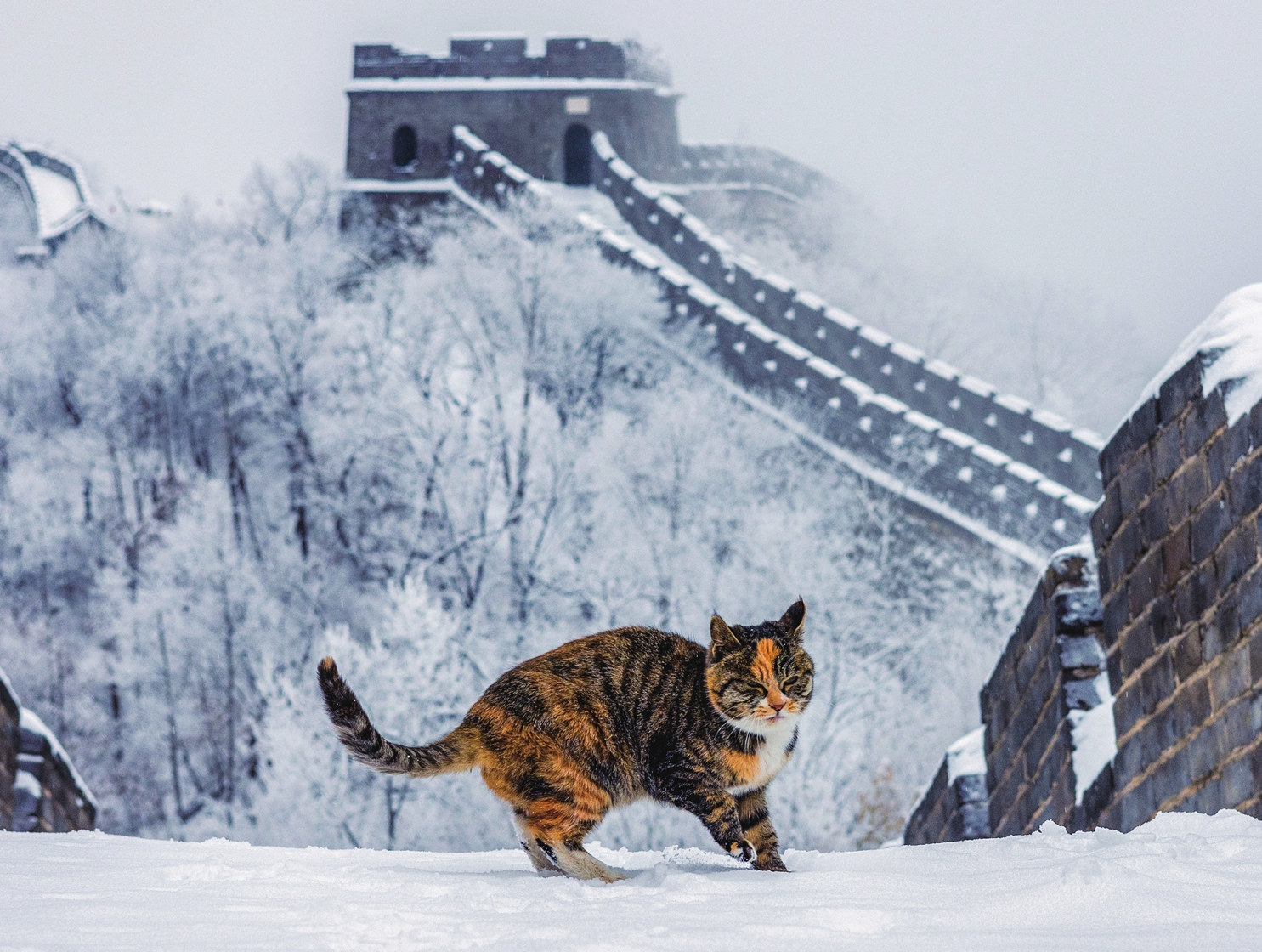
A post on Xiaohongshu (also known as RedNote app), China's lifestyle platform, showing an animal protection group rescuing two cats living on the Great Wall, drew public attention. The images reignited discussions around a long-observed presence on the Wall: Cats that have made the ancient structure their home.
For years, visitors have shared videos of cats weaving through stone battlements or basking on watchtowers, especially along the Mutianyu section of the Great Wall near Beijing. On both Chinese and overseas platforms, the so-called "Great Wall cats" have become unexpected internet celebrities - symbols of warmth amid weathered stone, and of life persisting in a place shaped by history.
Cats have not always been part of the Great Wall's landscape. According to Guo Min, deputy general manager of Beijing Mutianyu Great Wall Tourism Service Co., the cats' presence at Mutianyu developed gradually over several decades.
The Great Wall's monumental history, set against the agility and presence of the cats, has given the Mutianyu section a more human and approachable image while drawing greater public attention to the welfare of stray animals, Guo told the Global Times.
Site managers also said the wall can serve as a window to the world, conveying a vision of "respect for life and harmony between humans and nature."
Responsible co-existence
Managing cats in a UNESCO-listed heritage site is a delicate task. At the Mutianyu section, staff provide basic support while trying to minimize impact on the wall itself.
The site established a "Great Wall Cats' Home" and provides the cats with food and drinking water. Minor injuries are treated on site, while serious cases are referred to veterinarians and animal welfare groups. Some cats have undergone sterilization through partnerships with volunteer organizations, or animal hospitals.
For managers, the cats on the Great Wall are more than a charming distraction. They symbolize the preservation of cultural values and offer a deeper understanding of history.
In Guo's view, the attention surrounding the Great Wall cats highlights a broader cultural moment. He said paying attention to animal welfare at historic sites "is not just an act of kindness. It represents the preservation of cultural values and a deeper understanding of history, while also supporting sustainable development and adding a human touch in the present." Allowing history and living creatures to coexist adds warmth and richness to the Great Wall's cultural story. It also demonstrates the site's humanistic approach, enhancing visitors' experiences and emotional connection, remarked Guo.