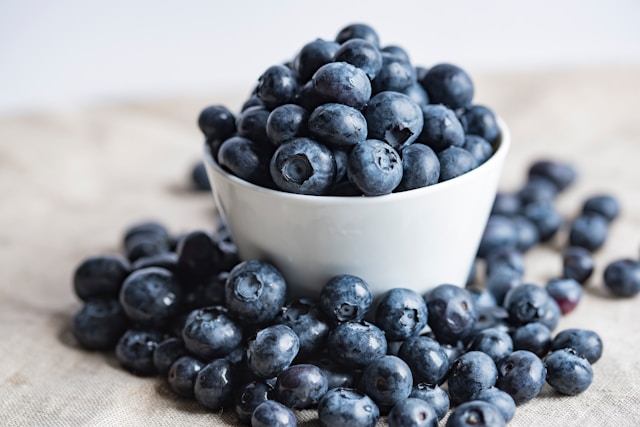
Blueberries are currently in season and flying off the shelves. However, it's not their price, but their size that is turning heads. The commonly seen berries with a diameter of 12 to 14 millimeters are now considered mini-fruits, with some giant blueberries reaching up to 30 millimeters in diameter – nearly as large as cherries.
Blueberries are extremely rich in anthocyanins. For those who spend long hours in front of screens, anthocyanins are one of the few antioxidants that can reach the eye area, helping to alleviate dryness and soreness. Furthermore, phenolic compounds in blueberries can help reduce vascular inflammation, while dietary fiber assists in regulating blood lipid levels, contributing to cardiovascular health.
The anthocyanin content in every 100 grams of blueberries ranges from approximately 70 to 500 milligrams. Consuming just 10 to 20 small or medium-sized blueberries (14-16 mm in diameter) daily can easily meet the body's anthocyanin needs.
Anthocyanins are natural, blue-colored pigments found in plants. They are concentrated where the color is deepest. For blueberries, the pigment is in the dark skin, while the flesh is pale, meaning the anthocyanins are primarily located in the skin.
Research indicates that for the same weight, the total surface area of the skin from many small blueberries is greater than that of a few large ones. This means that when eating an equal weight of blueberries, you consume more skin area with smaller berries, and consequently, more anthocyanins.
A 2020 study published in the Journal of Agricultural and Food Chemistry analyzing 12 blueberry varieties confirmed that small-sized blueberries generally have higher anthocyanin content and antioxidant capacity than large-sized ones.
When it comes to taste, large blueberries don't necessarily have the advantage either. Due to their larger cell volume, the pectin in large berries can degrade more easily, leading to a watery texture, especially after long-distance transport, and they can sometimes be surprisingly tart. In contrast, small and medium-sized blueberries have thicker skins and denser flesh, with more concentrated sugars, resulting in a richer flavor.
However, anthocyanins are not something to be consumed in unlimited quantities. While they are powerful antioxidants that protect the body from free radical damage, excessive intake can interfere with mineral absorption. Therefore, individuals with anemia or zinc deficiency should avoid consuming very high amounts. Additionally, people with gastrointestinal issues are also advised not to eat too many blueberries.