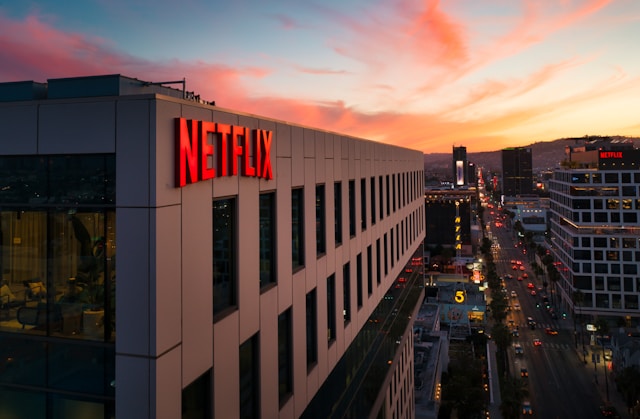
Even though lots of people in Hollywood depend on Netflix for their livelihoods, they hate the company and what it has done to a century-old, once-thriving business. But up to now, almost nobody has said it out loud.
Producers hate Netflix because they can't get back-end profits. A-list actors and their agents hate that they've put a lid on salaries and residuals. Studios hate Netflix when it poached their talent and jacked up executive salaries. Exhibitors hate Netflix because the streamer is undermining the theatrical business by convincing people it's better to stay on the couch.
Now comes this seismic event, with Netflix announcing plans to acquire Warner Bros. Discovery — specifically the crown jewels of HBO and the movie library and distribution business; CNN and other cable networks would be sent off on their own, as a separate business — for $83 billion. Part of the shock coursing through the industry is because up until this week, most people assumed that tech scion David Ellison's Paramount Skydance, backed by his Trump-aligned billionaire father, Larry Ellison, would win the prize.
The tables turned in recent days, as the Netflix co-C.E.O. Ted Sarandos offered the Warner Discovery C.E.O. David Zaslav a job running the studio, along with a $5.8 billion breakup fee, surpassing Paramount's offer. Assuming the deal passes regulatory scrutiny, it means that Netflix, not so long ago an upstart with all sorts of new ideas, now officially rules over Hollywood. Netflix never had much use for theatrical releases, once the entire idea of the entertainment industry. "It's the day the theaters died. It will always be looked at as that," said a top Hollywood movie producer, who was deeply panicked. "That will be David Zaslav's legacy. As the guy who killed moviegoing," he said.
"Everyone's scared to say it because Netflix has half the pay deals, half the output deals and massive TV deals," he went on, referring to lucrative contracts to stream content made by other studios on Netflix. "But it's not debatable. Every single person in every studio, every person who runs the studio is saying this."
"The proposed acquisition of Warner Bros. by Netflix poses an unprecedented threat to the global exhibition business," said Cinema United in a near-midnight press release. "Netflix's stated business model does not support theatrical exhibition. In fact, it is the opposite."
The reason the resentment has been largely below the surface until now, including among competitor studio chiefs, is because of how powerful Netflix has become in Hollywood. With a market cap of $426 billion, it now dwarfs every other Hollywood studio — Disney, at $187 billion, is a distant second. Netflix spent about $18 billion on content in 2025, on movies and television shows that drive the economic flywheel of entertainment.
But that doesn't mean people like it, or like playing by its data-driven rules. Founded in 1997 as a DVD rental business, it leaped into streaming in 2007.
Netflix was focused on volume and scale, rather than wooing talent with expense accounts and private planes. It largely ended back-end profit participation, which other streamers have copied. Only a handful of mega-producers get first-look deals that allow them to take the time to develop quality material. Television has by now become largely a streaming business, as cable and broadcast reach their sunset, with tight limits on budgets and, again, no back-end profit. On the movie side, directors have to beg for theatrical distribution — even for a spectacular movie like "Frankenstein," which got a measly three-week run in a few hundred theaters to make its director, Guillermo del Toro, happy. (He wasn't.)
Driving all this, Mr. Sarandos has been the leading evangelist for giving the consumer control, more options, greater ease. And he has been a consistent detractor of the theatrical experience. During the Covid-19 pandemic, people lost the habit of going to movie theaters. It has never entirely come back.
But even if Netflix has been good for consumers (which is debatable; standouts like "Stranger Things" and "Adolescence" aside, it also serves up an endless buffet of often unambitious shows from around the world), it definitely hasn't been good for the people who make up the entertainment business. Many in Hollywood just don't trust Netflix, since Netflix was never about them.
So it's no surprise that the deal has many wondering if Mr. Sarandos will make good on his promise that Warner will continue to release movies in theaters. Or if he'll let Warner wither as a movie studio and just drive his streaming business to a $1 trillion market cap, as he has told friends and associates, is just around the corner.