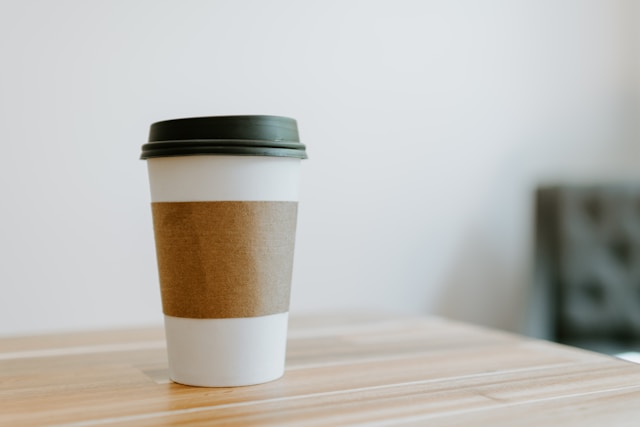
We've all been there: You're juggling a meeting, a morning commute, a stroller, a briefcase — whatever your version of a.m. chaos looks like. You grab that to-go cup of coffee like it's a life raft. You take a satisfying sip … and wonder, for the first time (or perhaps the hundredth), what that extra hole on the lid is actually for.
To crack this caffeinated case, I spoke to packaging expert Stanislav Krykun.
That little hole isn't there to release the aroma or make the lid look symmetrical. It's there to equalize pressure. "The hole is there to let air into the cup," Krykun says. "When a lid is fully closed, coffee doesn't pour out smoothly. The flow stops and starts, which often causes splashing."
Here's the basic physics behind that: When you drink from the sip hole, liquid leaves the cup. If air can't replace that volume, pressure builds inside, and the flow hesitates. When the pressure finally shifts, too much liquid can rush out at once.
As Krykun explains, "As coffee leaves the cup, air needs to go in. If it can't, pressure builds, and the liquid hesitates. When the pressure finally changes, too much coffee can come out at once. The hole avoids this by letting air in right away, so drinking feels normal and controlled."
Lid designers deliberately position the vent hole so that air and liquid don't compete for space inside the cup. "The hole is placed where it won't interfere with drinking," he notes. "It's usually kept separate from the sip opening so air and liquid follow different paths. Designers test different positions to see what gives the smoothest flow and least leaking."
Think of the hole as a tiny air valve. It keeps pressure balanced, so the coffee can glide through the sip opening in a steady, predictable stream. Without it, drinking from a sealed lid would be messier, louder and a lot more frustrating.
Is that its only function?
Nope. While equalizing pressure is the primary purpose, that tiny hole offers a few other benefits:
Temperature moderation: By letting air and steam escape, it slightly influences how hot that first sip feels.
Spill reduction: Preventing liquid from pooling under the lid reduces dribbles and surprise leaks.
Smoother drinking experience: A steadier flow delivers a more predictable tasting experience — no weird pauses or puckery spurts.