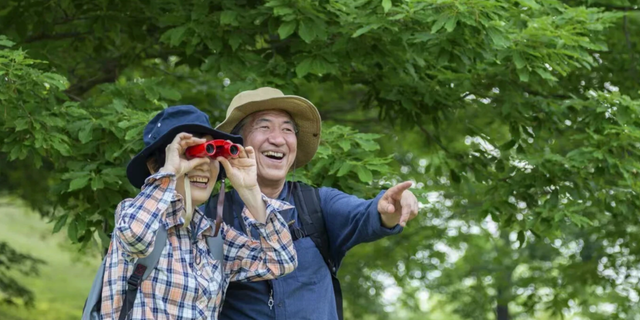
For 58-year-old Zhang Shaomei, retirement has never meant quiet days at home. Just three days after wrapping up her career, she flew to Malta, where she spent the next three months switching between classroom lessons and travel adventures. With a Schengen visa in hand, she visited eight European countries along the way.
For Zhang, studying abroad was never just about improving her language skills. Far more meaningful was the deep cultural immersion — and the chance to keep creating value in a new chapter of life.
"Retirement should not be a pause for the mind," she said. "We should keep learning, keep engaging with the world, and never stop absorbing and reflecting."
Zhang's story is becoming less unusual. As those born in the 1960s and 1970s — better educated, more financially secure and with broader global outlooks — enter retirement in growing numbers, a new market is quietly taking shape. The silver economy is shifting its focus beyond elderly care, expanding into lifestyles built around education, travel and personal growth.
By the end of 2025, more than 320 million people in China were aged 60 or above, accounting for nearly a quarter of the total population. That number is projected to climb to 390 million by 2030. Statistics from international education provider EF Education First show that for its overseas study programs in China, the proportion of customers aged 46 and above grew from 6 percent in 2019 to 28 percent last year.
Xu Xiaorong, a 62-year-old former corporate executive, has gone on several overseas study tours to the UK and Singapore since retiring. Her first trip didn't go smoothly. No one was at the airport to meet her, and the school's phone went unanswered.
"Simple things we take for granted back home become real challenges when you're abroad," she said.
But she handled every obstacle on her own — enrollment, accommodation, navigation. Along the way, she visited the former homes of writers like Jane Austen and Charlotte Brontë, and explored the landscapes that inspired their novels. She began posting videos of her journey online and quickly attracted a large following. One comment summed up what many wrote: "Seeing your vibrant life, I no longer fear growing old."
As senior study tours grow into a genuine market trend, dedicated services have emerged to meet the demand. Zi Wenli retired at the end of 2024 and noticed that courses at traditional senior universities often lacked depth. Drawing on her background in international education, she founded a study-abroad club for retirees, connecting them with short-term programs in art, design and language. She has since partnered with 17 international institutions worldwide.
"They are paying for a new way of life," Zi said — one that blends learning, travel, cultural immersion and self-renewal.
Major education companies have taken notice. Programs now on offer include art tours in the UK, culinary experiences in France, and language courses in New Zealand. Some participants plan entire year-round learning itineraries spanning multiple continents, timing their trips to the seasons. These programs typically last two to four weeks — long enough to feel genuinely immersed, short enough to remain accessible.
For many participants, the pull goes beyond sightseeing. The goal, as one educator put it, is "to keep their minds sharp and stay attuned to a changing world."
Retirement, it turns out, is not an ending. It's just a different kind of beginning.