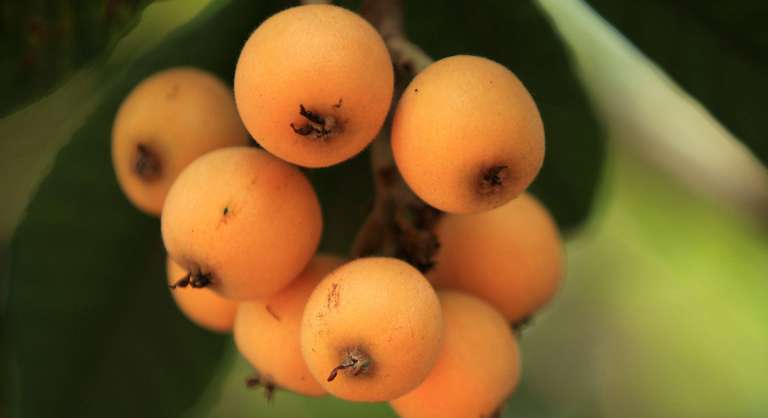
A loquat may last only seconds on the palate, but in Dongshan town in Suzhou, Jiangsu province, producing one can take an entire year. The hillsides beside Taihu Lake are known for white jade loquats, whose mellow sweetness is balanced by gentle acidity.
The harvest usually reaches its peak around xiao man, or Grain Buds, a solar term in late May. Its name means "small fullness," marking the stage when grains begin to fill but are not yet ripe. For generations, Dongshan farmers have used this seasonal rhythm to judge when loquats have lost their sharp early acidity and developed their signature sweetness. Nature, however, does not follow a rigid calendar.
In 2026, the harvest began about 10 days later than in 2025, according to lifelong farmer Song Furong. Winter was not extremely cold, he said, but heavy frost and thick morning fog covered the trees. Hail and heavy rain can also scar the fruit or knock it down, while drought forces farmers to pump water uphill from Taihu Lake.
The region's prized white jade variety carries a family history. Farmer Huang Jichuan said it could be traced to a single exceptional tree found decades ago by his father, Huang Jiyu. Years of cultivation then spread the variety across Dongshan's hillsides.
Premium fruit demands careful work long before harvest. In spring, farmers thin the clusters by hand, removing most young fruits so the remaining ones receive enough nutrients to grow larger and sweeter. Around xiao man, they climb steep slopes before dawn to pick the ripe fruit. The loquats must then be sorted, placed by hand into foam trays and prepared for overnight shipment.
The work is tiring, yet farmers describe their orchards with affection. "It's like raising children," Song said. "If the trees get sick, you treat them. Only careful tending can bring out the fruit at its best."
Loquats also remain part of daily life in Dongshan. Extra fruit may be preserved in syrup or used in traditional foods. Chefs have also paired fresh loquat with ingredients such as Job's tears and red dates, using its natural sweetness and soft floral note in chilled sweet soups.
That is the hidden story inside one small fruit: a brief taste shaped by weather, family knowledge and a full year of patient work.