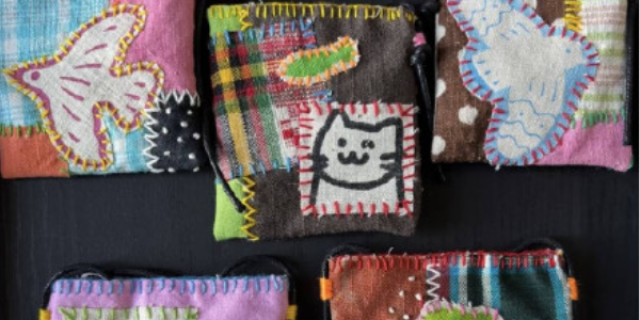
After perler beads, another old-fashioned craft is finding new fans among young people: patchwork.
Patchwork is hardly new. For generations, people have sewn scraps of fabric together to make clothes, bags and household items. But today, the craft is returning in a lighter and more social form. Instead of learning complicated techniques at home, beginners can book a session at a DIY sewing shop and finish their first creation in an afternoon.
Many of these shops charge between 80 and 100 yuan per hour. A typical visit begins with choosing a design and picking out fabrics. With help from an instructor, customers then cut, sew and decorate the pieces. Most shops limit each project to three hours, so even complete beginners can leave with something they have made themselves.
For some young people, however, the finished product is only part of the attraction.
One patchwork fan, who spends at least three hours sewing almost every weekend, says the process allows her mind to switch off after a busy week. Another enjoys watching a pile of unrelated fabric scraps slowly turn into a complete object. Cutting and sewing may take patience, she says, but the sense of achievement feels real and satisfying.
That slow transformation is exactly what makes patchwork appealing. Fuse-bead art often involves copying an existing pattern, while patchwork leaves more room for personal taste. People can choose their own colors, shapes and decorations. They can also combine sewing with painting or embroidery, turning one project into a mixture of several hobbies.
The finished pieces have practical value, too. A customer might make a bag for everyday use, a gift for a friend or a tiny outfit for a pet. Couples can create matching keepsakes, while parents and children can work on a project together. Each item carries a personal story that something bought from a shop cannot easily copy.
Experts say the trend reflects a wider change in how young urban consumers spend their free time. Traditional patchwork can be difficult and time-consuming, but today's workshops lower the barrier by offering simple designs, prepared materials and step-by-step guidance. Customers do not need years of experience. They only need a few free hours and a willingness to try.
In fast-moving city life, that may be the real charm of the craft. Patchwork asks people to slow down, focus on one small task and create something with their hands. For a while, phones, deadlines and unfinished work can all wait.
A few pieces of fabric may not fix every source of stress. But stitch by stitch, they can offer something increasingly rare: a quiet mind, a visible result and the pleasure of saying, "I made this."