"Ni Hao, Ni Hao!"
A server approaches the table carrying a small iron wok filled with steaming beef and green peppers. The greeting is Chinese, but the rest of the announcement is in English: "Chef Fei's stir-fried beef with peppers. Enjoy!"
The little performance feels both familiar and new — which is exactly what Chef Fei hopes to achieve with its first American restaurant.
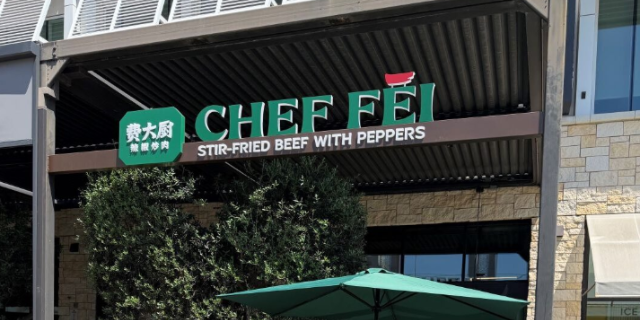
The Chinese Hunan food chain opened at Westfield UTC in San Diego on September 5. Instead of beginning in a neighborhood known for its large Chinese community, it chose a busy, upscale shopping center visited by a much wider mix of diners.
That decision turns the restaurant into an experiment: Can a brand built around traditional Hunan flavors attract American customers who may never have tried the cuisine?
Chef Fei operates more than 200 restaurants in China. Its best-known dish there is pork stir-fried with fresh green peppers. In San Diego, the menu also features a version made with American Wagyu beef, combining a cooking style from Hunan with an ingredient familiar to local diners.
But the restaurant is trying to introduce more than spicy meat. At the center of its identity is something Chinese cooks call wok qi, or the "breath of the wok."
The expression describes the smoky aroma and intense flavor created when ingredients are tossed quickly in an extremely hot wok. It depends on heat, timing and the cook's skill. Wait too long, and the vegetables become soft. Move too slowly, and the meat loses its texture.
This makes wok qi difficult to explain on a menu. It is easier to understand when a hot iron wok arrives at the table, still giving off steam and the smell of peppers.
The San Diego restaurant has adjusted some ingredients for local diners, but it has kept several features that made the brand recognizable in China. Food is served in small woks, chefs cook dishes to order, and servers still announce the signature dish when it arrives.
Even the brand's English name reflects this balancing act. Rather than simply using the Chinese pronunciation, "Fei Da Chu," the company chose "Chef Fei." The name is easier for English speakers to understand while keeping the cook — not an abstract idea of Chinese food — at the center.
Early curiosity is not difficult to attract. During the restaurant's soft opening, a line had formed by two o'clock on a Sunday afternoon, hours before dinner.
The harder test comes later. American diners already know many forms of Chinese food, from long-established takeout dishes to hot pot and soup dumplings. Hunan cuisine must find its own place in that crowded landscape.
Chef Fei is betting that it can translate the experience without watering it down: familiar beef, unfamiliar peppers; an English explanation, preceded by "Ni Hao"; a polished American shopping center filled with the smell of a Chinese wok.
A line outside may signal curiosity. For a restaurant crossing an ocean, however, the real answer will be whether those first-time diners return for a second meal.