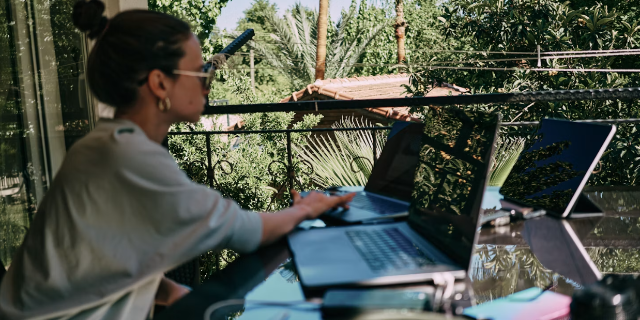
In mountain villages, seaside towns and quiet country communities, a new kind of workday is beginning.
Laptops are opening beside tea fields. Video meetings are taking place in converted farmhouses. People finish a report, close the screen and step outside for a walk through the woods.
Scenic destinations were once places to visit, photograph and leave. Now some are becoming temporary offices.
The people carrying their work into these places are known as digital nomads. They include freelancers, entrepreneurs and employees whose jobs can be done online. As long as they have a laptop and reliable internet, they are no longer tied to one desk — or even one city.
This lifestyle has grown beyond a small group of adventurous travelers. Special communities now offer bedrooms, shared offices, stable Wi-Fi and social activities in places traditionally associated with holidays. Businesses have also created "workcation" packages, turning work and vacation into a single experience.
In Anji, a mountain county in eastern China, an unused bamboo-processing factory has been transformed into a community for remote workers. People come not simply to see the landscape but to live and work there for days or weeks.
Some carry their computers onto the grass or into the hills. Others develop cycling routes, record podcasts or explore business ideas connected to local life. Shared meals and activities help strangers meet, exchange skills and sometimes create projects together.
This changes the meaning of travel.
A tourist may spend a weekend rushing between popular sights. A digital nomad stays long enough to find a favorite café, shop for groceries and recognize the people living nearby. The destination becomes part of ordinary life rather than a background for photographs.
The attraction is easy to understand. A video meeting in the morning might be followed by a mountain walk in the afternoon. When ideas stop coming, looking up from the screen offers something more refreshing than another office wall.
For workers tired of long commutes and fixed routines, the possibility feels liberating. Work is still work, but its surroundings no longer have to feel dull.
The destinations benefit as well. Cafés add power sockets, guesthouses create work areas, and former factories or empty homes gain new uses. Visitors who remain for weeks may spend more locally and form deeper connections than tourists who arrive only to take pictures.
Yet digital nomad life is not a holiday with occasional emails.
Deadlines still travel with the laptop. Weak Wi-Fi can turn a peaceful village into a professional disaster. Shared living is not for everyone, and constantly moving requires money, planning and a job that allows remote work. When the bedroom, office and holiday destination become the same place, switching off may become harder.
Even with these difficulties, the trend is changing both sides of the journey. Workers gain more freedom over where they spend their days, while scenic destinations become places to live, create and connect — not simply backgrounds for photographs.
That may be the most important change. Digital nomads are not simply taking their jobs on holiday. They are turning travel into everyday life — and asking whether work must belong to one building at all.
The office has not disappeared. It has become something people can fold into a backpack.