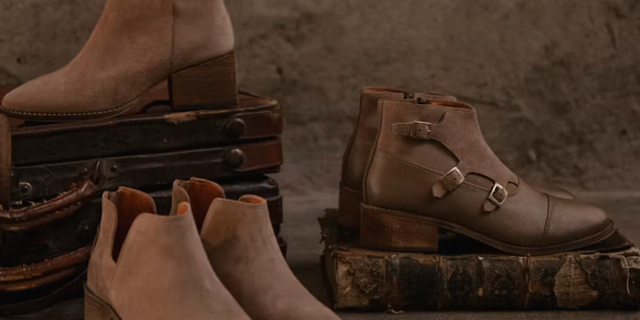
When Inger Sparring-Barraclough arrived in a small Ontario town from Sweden in 1973, she needed to rebuild her life, for herself and her three teenagers. She took a job in a Scandinavian furniture store in a new mall.
One thing quickly struck her in her new home: she could not find shoes she liked.
Coming from Europe, where she was used to stores carrying distinctive pieces and carefully selected styles, she thought that a curated feel was missing from the local retail scene. So she decided to open her own shoe shop, founding it in the same mall in 1974.
"Then she became very successful almost from the get-go," recalls her daughter Maria Cronk, 65, who owns what later became a group of shops. "People just loved her store."
Her clientele appreciated not only her flair for handpicking European-inspired shoes and other items such as barnwood furniture, but also her sense of what looked good.
Over time, the shop expanded into clothing and accessories, developing a reputation for striking styles. But she never expected to lay the foundation for the three-generation family business that it is today.
Where the friction comes from
Bringing her son, her daughter and two granddaughters into the company has meant navigating family dynamics and business decisions, from how the stores operate to how leadership transitions unfold, that uncovered tensions as the third generation stepped into larger roles.
"We fought a lot," says Ms. Cronk's daughter Alix Martin, 38, with a laugh, recalling early disagreements with her grandmother after she joined the business in 2009. "She had been doing things the same way for 30 years and I was coming in with spreadsheets and systems."
The clash reflects a familiar dynamic where founders often rely on instinct and experience while younger family members arrive with new tools and ideas, explains David Simpson, who directs a centre for business families at a Canadian university.
"Founders often struggle to see the next generation as capable professionals," Simpson says. "The challenge is balancing the values that built the business with new ideas that keep it relevant." Retail fashion can sharpen those tensions, he adds, because staying competitive requires a constant understanding of changing tastes, which often comes naturally to younger leaders.
Ms. Martin's sister Amanda Worsley, 34, focuses on shaping the shops' atmosphere and storytelling while expanding their online presence. "The biggest thing is the heart behind it," Ms. Worsley says. "Everything is handpicked because we love it."
Customers continue to respond to that approach. Many treat the stores as community spaces as much as retail destinations. "We have people who come in just to say hello or tell us how someone in their family is doing," Ms. Cronk says.
The generation that didn't plan to join
Ms. Cronk had not originally planned to join the business. She was a Grade 3 teacher when, in 1984, her mother's longtime store manager left suddenly during the busy Christmas season.
Ms. Cronk stepped in to help. "And I never left."
The experience awakened the same entrepreneurial instinct in her that had driven her mother. Within months, she left teaching and, with her mother, opened another location. At 25, she was running her own store, supported by a bank loan.
Her mother, meanwhile, would open and close stores under various names across the region throughout the 1980s and 1990s according to market demand. At one point, the group had eight to 10 stores.
After Ms. Cronk started a family, the business became a second home to her daughters, who played in the backroom as kids and later worked in sales on weekends and in the summer. The sisters, like their mother before them, hadn't intended to join the business full-time, but they each brought useful skills. Ms. Martin holds an MBA and today manages the accounting, payroll and financial systems. Ms. Worsley, a photographer, had the creative eye to become the company's buyer.